
Founder Story · E-commerce · Setback · Gurugram
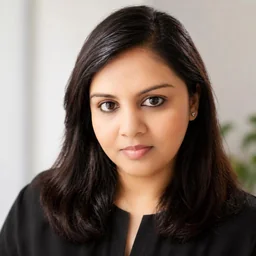
Radhika Aggarwal co-founded ShopClues, India’s first unicorn with a woman co-founder, and lived through its long unwinding
Founded in 2011 to serve the next-half-billion online shoppers, ShopClues briefly joined India’s unicorn club. Its later story is one of the most quietly important in Indian e-commerce.

In January 2016, when ShopClues raised a round that valued the company at over a billion dollars, it quietly broke a ceiling. It was widely reported as the first Indian unicorn with a woman co-founder. Radhika Aggarwal, a co-founder and chief business officer, became, in that moment, one of the most visible women in Indian e-commerce.
The fact that ShopClues spent the next several years unwinding does not erase that moment. It complicates it. The full story is worth telling, partly because most of Indian e-commerce’s gendered storytelling stops at the unicorn headline and never opens the second chapter.
A founding team in 2011
ShopClues was founded in 2011 by Radhika Aggarwal, Sandeep Aggarwal and Sanjay Sethi. Radhika had earned her MBA at the Olin Business School at Washington University in St. Louis, worked in marketing at Nordstrom and in strategic planning at Goldman Sachs in the United States, and had earlier founded Fashionclues, a niche US-facing online fashion property.
The team set out with a deliberately different e-commerce thesis from the larger players that were then defining the category in India. ShopClues was structured as a managed marketplace, with very wide assortment, light branding, and a strong tilt toward price-sensitive shoppers outside the largest cities.
The next-half-billion thesis
The thinking was simple. The first wave of Indian e-commerce would be won by the largest, best-funded marketplaces in metros. The second wave, smaller cities, lower ticket sizes, more unbranded products, would need a different operator. ShopClues built for the second wave.
Through the mid-2010s, the company scaled to millions of merchants and a long tail of categories, with growth concentrated in tier-two and tier-three cities. It became, for a while, one of the four most-talked-about horizontal e-commerce companies in India.
The unicorn moment, and what came after
The January 2016 round that took ShopClues into the unicorn club came at the very end of a generous capital environment for Indian consumer internet companies. Within months, the environment turned. The category came under intense margin pressure as the largest players poured capital into the discounted-marketplace race.
Through the late 2010s, ShopClues raised smaller rounds at lower valuations and lost ground to better-capitalised rivals. In late 2019, the company was acquired by Singapore-based marketplace operator Qoo10 in an all-stock deal widely reported at well under its erstwhile unicorn valuation. The arc was sobering for a generation of Indian consumer internet founders.
The under-told second-chapter problem
One of the under-discussed parts of Radhika Aggarwal’s story is the second-chapter problem. The coverage of women founders in Indian tech has tended to stop at the first peak, an IPO, a funding round, a cover story. ShopClues asks readers to sit with a different kind of arc: one that goes up, plateaus, then comes back down.
Aggarwal has continued in operating and advisory roles, and has continued to speak publicly. The honest reading of her career is not a fall-from-grace narrative. It is a story of having helped build one of the genuinely category-defining companies of Indian e-commerce, in a category that almost all early players ended up losing money in.
“The first wave of Indian internet was about whether companies could be built. The second was about whether they could survive.”
What founders can take from the ShopClues story
ShopClues should be read alongside the most-quoted Indian e-commerce stories, not separately from them. It is a reminder that capital cycles, not just product quality, determine which businesses come out of a category alive.
For women founders especially, it is a reminder that coverage and capital both have a way of disappearing quickly when the company stops being on its way up. The founders who keep operating through that quiet period are doing some of the hardest work in Indian entrepreneurship.
What ShopClues teaches about Indian capital cycles
The mid-2010s Indian e-commerce category was shaped by a generous, unusually patient capital environment. From 2016 onward, that environment compressed sharply, and the companies that had not yet built durable unit economics discovered that “winning” the category did not mean what it had during the easy-capital years. ShopClues is one of the more honest examples of how that compression played out on a public stage, the unicorn round was real, the contraction was real, and the operating team had to navigate both. For founders raising into long-cycle consumer categories, the capital cycle is as important an operating variable as product fit.
Founder Snapshot
- Name
- Radhika Aggarwal
- Co-founders
- Sandeep Aggarwal, Sanjay Sethi
- Company
- ShopClues (Clues Network Inc.)
- Founded
- 2011
- Headquarters
- Gurugram, India
- Education
- Washington University in St. Louis (Olin Business School)
- Earlier roles
- Nordstrom; Goldman Sachs; co-founder of fashion startup Fashionclues
- Notable
- ShopClues entered India’s unicorn club in January 2016, widely cited as India’s first unicorn with a woman co-founder; the company was later acquired by Singapore-based Qoo10 in 2019.
Frequently asked questions about Radhika Aggarwal
Who founded ShopClues and when?
ShopClues was co-founded in 2011 by Radhika Aggarwal, Sandeep Aggarwal and Sanjay Sethi. Radhika had earned her MBA at the Olin Business School at Washington University in St. Louis, worked in marketing at Nordstrom and in strategic planning at Goldman Sachs in the United States, and had earlier founded Fashionclues, a niche US-facing online fashion property. She served as the chief business officer at ShopClues.
Why was ShopClues a landmark for women in Indian tech?
In January 2016, ShopClues raised a round that valued the company at over a billion dollars. It was widely reported as the first Indian unicorn with a woman co-founder. Radhika Aggarwal became, in that moment, one of the most visible women in Indian e-commerce. The unicorn round broke a real ceiling: until that point, Indian unicorns had all been male-founded.
What happened to ShopClues after the unicorn round?
The January 2016 round came at the very end of a generous capital environment for Indian consumer-internet companies. Within months, the environment turned. The category came under intense margin pressure as the largest players poured capital into the discounted-marketplace race. Through the late 2010s, ShopClues raised smaller rounds at lower valuations and lost ground to better-capitalised rivals. In late 2019, the company was acquired by Singapore-based marketplace operator Qoo10 in an all-stock deal widely reported at well under its erstwhile unicorn valuation. The arc is sobering and important to read in full.
What does this story teach about coverage and capital?
Coverage and capital both have a way of disappearing quickly when a company stops being on its way up. The honest reading of Radhika Aggarwal’s career is not a fall-from-grace narrative, it is a story of having helped build one of the genuinely category-defining companies of Indian e-commerce, in a category that almost every early player ended up losing money in. ShopClues should be read alongside the most-quoted Indian e-commerce stories, not separately from them, because capital cycles (not just product quality) determine which businesses come out of a category alive.
What is Radhika Aggarwal’s net worth?
There is no net-worth figure for Radhika Aggarwal from a reputable, independently-verifiable source. ShopClues reached a unicorn valuation of about $1.1 billion in 2016 before a sharp down-round and eventual sale to Qoo10; no credible personal net-worth figure is on the public record. The numbers that appear on celebrity or “net worth” aggregator sites are unsourced and inconsistent, so, in line with our editorial policy,
Your story could be next
Building a startup of your own?
We publish researched, permanent founder features like this one — profiles that keep ranking for your name and your company long after a social post fades. Sponsored placement, quoted per founder, with a guaranteed publish date.
Our newsletter
The Bright Story
If this one stayed with you, get the next one before chai — a single women-led story, researched and anchored only in verifiable facts. No noise, unsubscribe anytime.
Keep reading
Garima Luthra started Vaaree because India’s best home textiles were all being exported
E-commerce · PioneerAnisha Singh was an early woman of the Indian internet, and now funds the next ones
E-commerceRicha Kar built Zivame to give Indian women a private way to shop lingerie
Rural Commerce · Clean EnergyAjaita Shah built a rural commerce company where every single seller is a woman
Beauty · HaircareNikita Khanna found her own curls in lockdown and built Moxie Beauty for the hair India actually has
D2C · Home AppliancesGazal Kalra co-founded Rivigo, India’s first trucking unicorn, on a promise to get drivers home every night
More for founders
- Women-led startup directorySearch 100+ women-led Indian companies by industry, city, funding stage and year.
- VC directoryWhich funds invest in India, at what stage and cheque size, and who they’ve backed.
- Startup trends & dataLive charts of women-led startups in India — sectors, funding stages and cities.
- Free founder toolkit100+ directories, grants, PR, templates, AI tools and India’s schemes.
- Funding MatchFind the government funding you actually qualify for — in 60 seconds.
- Templates & checklistsPitch deck, cap table, term sheet and founders’ agreement.
Comments
No comments yet — be the first to add one.