
Founder Story · E-commerce · Pioneer · New Delhi
Anisha Singh was an early woman of the Indian internet, and now funds the next ones
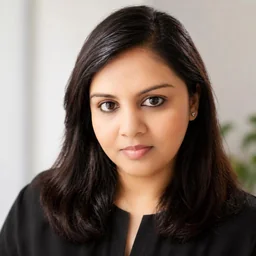
She co-founded MyDala in 2009, one of India’s early local-deals platforms, in an ecosystem with almost no women founders. She later built She Capital to invest in women-led ventures.

By 2026 it is unremarkable to name a dozen Indian women who founded internet companies. In 2009 it was not. When Anisha Singh co-founded MyDala, a local-deals and merchant-marketing platform, she was doing it in a consumer-internet ecosystem that had very few visible women founders and an investor base with even fewer women writing cheques. The significance of her story is partly the company, and partly the timing: she was building before the path she now funds for others existed.
The arc has two halves. The first is operating: building and scaling MyDala through the messy early years of the Indian consumer internet. The second is structural: turning that experience into She Capital, an early-stage fund built specifically to put money behind women-led and women-centric ventures, an answer, from the inside, to the funding gap she had lived through.
The background: Washington DC, then back to build
Anisha Singh studied at American University in Washington DC, completing graduate education that combined communication and information systems. Her early career in the United States included work connected to a public-sector initiative supporting women entrepreneurs in raising capital, a thread that, in hindsight, runs straight through her later move into investing. She also ran an earlier digital-content/technology venture before MyDala, so she did not arrive at her best-known company as a first-time operator.
Choosing to come back and build a consumer-internet company in India in the late 2000s was a non-obvious decision. The ecosystem was thin, capital was scarce, and the playbook for this kind of company in the Indian market largely did not exist yet. She built into that gap rather than waiting for it to close.
2009: co-founding MyDala
MyDala was launched in 2009 and co-founded by Anisha Singh along with Arjun Basu and Ashish Bhatnagar. The product addressed a real two-sided problem of that era. On one side, consumers wanted deals and discounts from local businesses but had no organised way to find them. On the other, small and local merchants wanted customers but could not afford expensive upfront marketing. MyDala sat in the middle: a platform that brought consumers offers and let merchants acquire customers with little or no upfront cost, paying on performance instead.
That model, performance-based local merchant marketing, is now a familiar category, but in 2009 it was early. MyDala scaled across a large number of Indian cities and built a substantial base of merchants and registered users, becoming one of the recognised names in the first wave of local-commerce and deals platforms in India.
Building as one of the few women in the room
The part of the MyDala story that is easy to under-state is the context. Through the early 2010s, the number of women running venture-backed consumer-internet companies in India was tiny. Founder rooms, investor meetings and conference stages were overwhelmingly male. Singh built and ran a company through that period anyway, and in doing so became one of the more visible women founders of the early Indian internet, a reference point for the founders who came after, simply because there were so few at the time.
Visibility of that kind is not a vanity metric. In a market where almost no one looked like you, being a founder who did the job publicly expands the set of people who can imagine doing it at all. That is a real, if hard-to-measure, contribution, and it set up the second act.
She Capital: turning the gap into a thesis
Singh later founded She Capital, an early-stage investment fund focused on women-led or women-centric ventures with high growth potential. The move is logically consistent with everything before it: a founder who had built through a funding gap, who had earlier worked on helping women raise capital, choosing to put institutional money behind the problem rather than just describing it.
This is the part most relevant to readers of this magazine. The single most cited obstacle for women founders in India is access to capital, not ambition, not capability, but the cheque. An operator-turned-investor who has lived both sides is unusually well placed to close that gap, because she is underwriting founders the way someone who has actually built a company underwrites them, not the way a spreadsheet does.
The cost of being early, paid in full
It is easy, from 2026, to look at a 2009 local-deals platform and apply hindsight: the category later became crowded, deals businesses globally had a turbulent decade, and the model evolved. That hindsight misses the actual achievement. In 2009 the Indian consumer internet barely existed as an investable category. Smartphone penetration was a fraction of what it would become, digital payments were primitive, and merchant digitisation was close to zero. Building a two-sided local-commerce platform in that environment meant educating consumers, onboarding offline merchants by hand, and convincing investors that the market would even arrive. Every one of those costs was paid up front, by the founders, before the tailwinds existed.
Being early is the least romantic form of pioneering because the pioneer rarely captures the eventual market in full, later entrants with better infrastructure often do. But the early founder changes something more durable than market share: she expands the set of things that are considered possible. MyDala mattered partly as a company and partly as proof, to investors, to other founders, and to women specifically, that this kind of business could be built here, by someone who did not fit the default template of who built it.
From operating the gap to underwriting it
The most strategically interesting thing about Anisha Singh’s career is the shape of the move from MyDala to She Capital. It would have been coherent for a successful operator to simply angel-invest occasionally, or to mentor, or to speak. Building a fund with an explicit thesis around women-led and women-centric ventures is a different and more structural decision. It says that the bottleneck for women founders is not advice and not visibility, both of which are plentiful and cheap, but capital allocation, which is scarce and controlled by a narrow set of people who mostly do not look like the founders being overlooked.
An operator who has built and scaled a company underwrites founders differently from a purely financial investor. She has lived the gap between a clean pitch and a messy operating reality, and she has lived the specific friction of raising while being the only woman in the room. That lived underwriting lens is exactly what is missing from the part of the capital stack that decides which early companies get to exist at all. The throughline of Singh’s career, early work helping women raise money, then building as a rare woman founder, then building a fund to back women, is unusually consistent. It treats the funding gap not as a grievance to describe but as a market failure to underwrite against.
Founder Snapshot
- Name
- Anisha Singh
- Company
- MyDala (Co-founder), local-deals / merchant-marketing platform
- Co-founders
- Arjun Basu, Ashish Bhatnagar
- MyDala founded
- 2009
- Model
- Performance-based local merchant marketing; consumer deals across many Indian cities
- Later venture
- She Capital, early-stage fund for women-led / women-centric ventures
- Earlier venture
- A digital-content / technology company before MyDala
- Education
- Graduate education at American University, Washington DC
- Significance
- One of the early visible women founders of the Indian consumer internet
What Indian women founders can take from the MyDala story
The first lesson is about being early. Singh did not enter a mature ecosystem with a clear template; she built a consumer-internet company in India when the category, the capital and the peer group were all thin. Being early is uncomfortable and underrated, you carry the cost of educating the market, but it is also how you end up as a reference point rather than a follower.
The second is about the two-sided insight. MyDala worked because it solved a problem for consumers and a problem for merchants in the same transaction, with merchants paying on performance. Marketplaces that try to extract value before delivering it to both sides tend to stall; the durable ones align the cost with the outcome. That principle has not aged.
The third is the one this magazine cares about most. The most useful thing a successful woman founder can do for the next generation is not only to be visible, but to control capital. She Capital is the logical end-state of an operator who experienced the funding gap and decided to sit on the side of the table where it actually gets closed. For women weighing what to build, that is worth internalising: building a company is one form of leverage; deciding who else gets funded is another, and the second is how the gap actually narrows.
There is a final, more sober point worth making. The honest version of the MyDala story is not a clean, frictionless triumph, the deals category globally had a hard decade, and the Indian consumer internet that MyDala helped pioneer was eventually defined by far larger, better-capitalised companies. That does not diminish the relevance of the story; it sharpens it. The point of studying early founders is not to copy their company; it is to copy the decision to build before the conditions were comfortable, and to understand that being early is a contribution even when it is not the entity that captures the eventual market. Singh’s second act, moving from operator to capital allocator, is the part most readers of this magazine can act on directly: the gap closes fastest when people who lived it control the cheque.
Frequently asked questions about Anisha Singh and MyDala
Who is Anisha Singh?
Anisha Singh is an Indian entrepreneur and investor. In 2009 she co-founded MyDala, one of India’s early local-deals and merchant-marketing platforms. She later founded She Capital, an early-stage fund focused on women-led and women-centric ventures. She studied at American University in Washington DC.
What was MyDala?
MyDala was a local-deals and merchant-marketing platform launched in 2009 that connected consumers with discounts and offers from local businesses, and helped merchants acquire customers at low upfront cost. It scaled across many Indian cities with a large merchant and user base during the early years of the Indian consumer internet.
What is She Capital?
She Capital is an early-stage investment fund founded by Anisha Singh that focuses on women-led or women-centric ventures with high growth potential. It reflects her shift from operating founder to investor backing the next generation of women entrepreneurs.
Why does Anisha Singh matter for women founders?
Anisha Singh was one of relatively few visible women founders during the first wave of the Indian consumer internet, building MyDala from 2009 in a market and investor ecosystem with very few women. Her later move into investing through She Capital aimed directly at the funding gap that women founders face.
What is Anisha Singh’s net worth?
There is no net-worth figure for Anisha Singh from a reputable, independently-verifiable source. MyDala once reached a valuation in the region of ₹1,000 crore; the business was privately held and no credible personal net-worth figure is publicly available. The numbers that appear on celebrity or “net worth” aggregator sites are unsourced and inconsistent, so, in line with our editorial policy,
Your story could be next
Building a startup of your own?
We publish researched, permanent founder features like this one — profiles that keep ranking for your name and your company long after a social post fades. Sponsored placement, quoted per founder, with a guaranteed publish date.
Our newsletter
The Bright Story
If this one stayed with you, get the next one before chai — a single women-led story, researched and anchored only in verifiable facts. No noise, unsubscribe anytime.
Keep reading
Garima Luthra started Vaaree because India’s best home textiles were all being exported
E-commerceRicha Kar built Zivame to give Indian women a private way to shop lingerie
E-commerce · SetbackRadhika Aggarwal co-founded ShopClues, India’s first unicorn with a woman co-founder, and lived through its long unwinding
Rural Commerce · Clean EnergyAjaita Shah built a rural commerce company where every single seller is a woman
B2B SaaS · CommunityTamanna Dhamija went from managing $250 million on Wall Street to building Convosight out of a parenting community
Edtech · Early ChildhoodNamya Mahajan built Rocket Learning around a two-minute video sent to anganwadi workers every morning
More for founders
- Women-led startup directorySearch 100+ women-led Indian companies by industry, city, funding stage and year.
- VC directoryWhich funds invest in India, at what stage and cheque size, and who they’ve backed.
- Startup trends & dataLive charts of women-led startups in India — sectors, funding stages and cities.
- Free founder toolkit100+ directories, grants, PR, templates, AI tools and India’s schemes.
- Funding MatchFind the government funding you actually qualify for — in 60 seconds.
- Templates & checklistsPitch deck, cap table, term sheet and founders’ agreement.
Comments
No comments yet — be the first to add one.