
Founder Story · Fintech · Unicorn · Gurugram
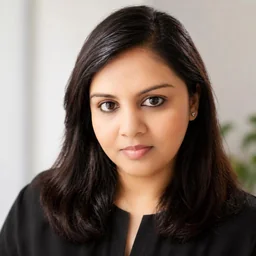
Ruchi Kalra co-founded two profitable unicorns, and made Oxyzo one at its Series A
A former McKinsey financial-services partner who helped build OfBusiness in 2015 and then turned its lending arm, Oxyzo, into a billion-dollar company at its very first institutional round.

One of the most quietly remarkable facts in Indian startup history is that a single household produced two unicorns, and that one of them was led by a woman who built it to profitability before she ever raised an institutional round. That woman is Ruchi Kalra, co-founder and CFO of OfBusiness and co-founder and CEO of Oxyzo Financial Services. In March 2022, Oxyzo closed a roughly $200 million Series A and crossed a $1 billion valuation in a single step, a unicorn at Series A, and one of the largest Series A rounds an Indian startup had ever raised.
Kalra’s story matters because it inverts almost every cliche about how Indian startups are supposed to be built. There was no years-long cash burn. There was no growth-at-all-costs phase. There was a methodical operator who treated lending the way a credit desk treats it, as a business that has to make money on every rupee it puts out, and who happened to be one of the very few women in the country to take a fintech company into the unicorn club.
From IIT Delhi to a McKinsey partnership
Ruchi Kalra trained as an engineer at the Indian Institute of Technology, Delhi, and went on to earn an MBA from the Indian School of Business. Her early career included an analyst stint at the research and analytics firm Evalueserve in the mid-2000s, before she joined McKinsey & Company. At McKinsey she rose to partner in the financial-services practice, advising banks, insurers and lenders on credit, risk and growth.
That background is the single most important thing to understand about how she later built Oxyzo. Most fintech lending companies in India were founded by technologists who learned credit on the way. Kalra arrived having spent years inside the financial-services industry, looking at the profit-and-loss statements of lenders from the outside. She had seen, in detail, how lending businesses make money and how they blow up. When she eventually ran one, she ran it like someone who had already audited the failure modes.
2015: co-founding OfBusiness
In 2015, Kalra co-founded OfBusiness with Asish Mohapatra, her husband, an IIT alumnus and former McKinsey colleague, along with Bhuvan Gupta, Nitin Jain and Vasant Sridhar. The founding insight was about the unglamorous middle of the Indian economy: the small and medium enterprises that buy steel, cement, chemicals, polymers and agri-inputs in bulk, and that struggle both to procure raw materials at good prices and to finance those purchases.
OfBusiness built a platform that did both at once. It aggregated SME demand for industrial raw materials, used that scale to negotiate better procurement, and bundled financing into the same transaction. Because the company could see exactly what a business was buying and why, it could lend against a real, collateral-like cash flow rather than against a thin credit file. That data-plus-distribution model is what eventually made the lending side so durable.
The contrast between the two principal founders became part of the company’s lore. Kalra was the methodical, finance-fluent partner who could sit across from bankers and institutional investors; Mohapatra was the relentless field-and-sales operator. OfBusiness grew fast, stayed disciplined on margins, and in April 2021 raised a large round, led by SoftBank, that valued it at roughly $1.5 billion, making OfBusiness a unicorn.
2016: Oxyzo, the lending arm that became its own company
In 2016, the financing inside OfBusiness was spun into a dedicated entity: Oxyzo Financial Services, a non-banking financial company built to provide cash-flow-matched working capital to SMEs, financing that lines up with the actual purchase cycle of a business rather than a generic term loan. Kalra took the CEO role at Oxyzo while continuing as CFO of OfBusiness.
What set Oxyzo apart was that it was profitable for years before it raised outside equity. It lent against real purchase data flowing through the OfBusiness ecosystem, it priced for risk, and it grew off its own book and debt lines rather than subsidising volume with venture money. When Kalra finally did raise institutional equity, she was negotiating from the position of someone selling a profitable lender, not a cash-burning experiment.
March 2022: a unicorn at Series A
In March 2022, Oxyzo announced a roughly $200 million Series A round, led by Alpha Wave and co-led by Tiger Global, with Norwest Venture Partners, Matrix Partners India and Creation Investments also participating. The round was struck at approximately a $1 billion valuation. It was reported at the time as the largest Series A round raised by an Indian startup, and it made Oxyzo a unicorn at its very first institutional financing, an almost unheard-of outcome, because it meant the company had built a billion-dollar business essentially without prior venture equity into that entity.
The structural significance is worth dwelling on. Most unicorns reach a $1 billion valuation after several rounds of dilution and years of losses. Oxyzo arrived there having proven unit economics first. For a lending business, where the easiest way to look like you are growing is to lend recklessly, that discipline is the whole story.
The household that produced two unicorns
Kalra and Mohapatra are frequently described as the first Indian husband-and-wife pair to each lead a company valued at more than $1 billion: he as CEO of OfBusiness, she as CEO of Oxyzo. It is a striking data point, but the more useful one for founders is the operating philosophy underneath it. In interviews, Kalra has repeatedly returned to the same themes, cash flow first, profitability as a discipline rather than a milestone, and a willingness to let go of personal ego in service of the business.
She has also been candid that the path was not frictionless. OfBusiness’s early fundraising is widely reported to have drawn dozens of investor rejections before the model was understood. Kalra has spoken about building the company while heavily pregnant, and about the assumption, still common, that the woman in a founding couple must be the junior partner. Oxyzo is, in part, an answer to that assumption.
Founder Snapshot
- Name
- Ruchi Kalra
- Companies
- OfBusiness (Co-founder & CFO); Oxyzo Financial Services (Co-founder & CEO)
- Co-founders
- Asish Mohapatra, Bhuvan Gupta, Nitin Jain, Vasant Sridhar
- OfBusiness founded
- 2015
- Oxyzo founded
- 2016 (as the OfBusiness financing arm)
- Sector
- B2B commerce & SME lending (fintech)
- OfBusiness unicorn
- April 2021 (SoftBank-led round, ~$1.5 bn valuation)
- Oxyzo unicorn
- March 2022, ~$200 mn Series A at ~$1 bn (unicorn at Series A)
- Education
- B.Tech, IIT Delhi; MBA, Indian School of Business
- Earlier roles
- Partner, financial-services practice, McKinsey & Company; analyst, Evalueserve
- Financials
- On the Hurun India Rich List 2025 (reports vary, ~₹4,000 crore+); co-founder of unicorns Oxyzo and OfBusiness.
Why the McKinsey-to-founder pattern is rarer than it looks
Plenty of consultants leave to start companies. Very few of them build a billion-dollar lender. The reason the pattern is rarer than it looks is that consulting teaches you to diagnose a business from the outside, and founding one requires you to be accountable for it from the inside, a different and harder skill. Kalra’s edge was that her McKinsey years were not generalist; they were spent deep in financial services, which is precisely the domain Oxyzo operates in. She did not switch industries when she became a founder. She switched seats within the same industry, from advising lenders to being one.
That distinction is the whole reason the lending book did not break as it grew. A great deal of Indian fintech lending in the late 2010s scaled fast on thin underwriting and then discovered, the hard way, what a credit cycle does to a loan book that was priced for growth rather than risk. Oxyzo’s structural advantage was that it lent against purchase data flowing through the OfBusiness ecosystem, it could see what a borrower was actually buying, for what, and whether the cash flow was real, and it was run by someone who had spent a career studying how lenders mis-price exactly that. The data was the distribution moat; the founder’s domain depth was the risk moat. Most lenders have at most one of those.
The quieter story: a woman running the lender
It is worth being precise about why Kalra is significant for this magazine’s readers, because the easy version, “woman co-founds unicorn”, undersells it. Indian fintech, and lending in particular, is one of the most male-dominated corners of the startup economy: capital-intensive, regulator-facing, and clubby. Kalra is not a co-founder with a notional title in that world; she is the CEO of the regulated lending entity, responsible for its balance sheet, its risk and its institutional relationships. Within a founding couple, the lazy assumption is still that the woman handles the softer functions. Oxyzo is structured the other way: she runs the hardest, most technical, most balance-sheet-heavy company in the group.
She has also been candid in interviews about the texture of getting there, building through pregnancy, fielding investor scepticism, and consciously subordinating personal visibility to the operating needs of the business. The point is not that the path was inspirational; it is that the path was operational. The reason to study Kalra is not that she persevered. It is that she made a series of correct, unfashionable decisions, profitability before equity, domain depth as a moat, cash flow over headline growth, and the unicorn outcome was a consequence of those decisions, not the goal that justified them.
What Indian women founders can take from the Oxyzo story
The Oxyzo arc is a useful corrective to two ideas that have hardened into conventional wisdom in Indian startups. The first is that you must burn capital for years to build something large. Oxyzo was a profitable lender before it took institutional equity, and it became a unicorn at Series A precisely because it did not need the money to survive, it needed it to accelerate. Profitability was not the reward at the end; it was the precondition.
The second is the quieter assumption that domain depth in finance is a back-office credential rather than a founder’s edge. Kalra’s years inside the financial-services industry were not a detour on the way to entrepreneurship; they were the entire moat. She understood credit risk and lender economics before she ran a lender, and that is why the business did not break when it scaled.
For Indian women weighing whether to start up, especially in capital-intensive, regulated sectors like lending, the takeaway is concrete. Deep operating expertise is a legitimate founding asset. You do not have to be the louder co-founder to be the one running the billion-dollar company. And building for cash flow first is not a conservative choice; on the evidence of Oxyzo, it can be the fastest route to a unicorn.
Frequently asked questions about Ruchi Kalra and Oxyzo
Who is Ruchi Kalra?
Ruchi Kalra is an Indian entrepreneur who co-founded OfBusiness in 2015 and Oxyzo Financial Services in 2016. She is Co-founder and CFO of OfBusiness and Co-founder and CEO of Oxyzo. Before entrepreneurship she was a partner in the financial-services practice at McKinsey & Company. She holds an engineering degree from IIT Delhi and an MBA from the Indian School of Business.
What is the difference between OfBusiness and Oxyzo?
OfBusiness is a B2B commerce and financing platform that helps small and medium enterprises buy raw materials such as metals, chemicals and agri-inputs. Oxyzo started in 2016 as OfBusiness’s financing arm and is now a separate non-banking financial company that provides working-capital and purchase financing to SMEs. Ruchi Kalra leads Oxyzo as CEO.
When did Oxyzo become a unicorn?
Oxyzo raised a roughly $200 million Series A round, completed in March 2022, led by Alpha Wave and co-led by Tiger Global, with Norwest Venture Partners, Matrix Partners India and Creation Investments also participating. The round was struck at about a $1 billion valuation, making Oxyzo a unicorn at its Series A stage, one of the largest Series A rounds by an Indian startup.
Why is Ruchi Kalra significant for women founders?
Ruchi Kalra is one of very few Indian women to have co-founded a fintech unicorn, and she did it with a focus on profitability and cash flow rather than growth at any cost. With her husband Asish Mohapatra, who leads OfBusiness, the couple are often described as the first Indian husband-and-wife pair to each lead a company valued at over $1 billion.
What is Ruchi Kalra’s net worth?
Ruchi Kalra appears on the Hurun India Rich List 2025, with reported figures around ₹4,000 crore and higher depending on the source. She co-founded Oxyzo (a fintech unicorn) and OfBusiness. Because the published figures vary across reports and the companies are privately held, we cite the list inclusion rather than a single precise number.
Your story could be next
Building a startup of your own?
We publish researched, permanent founder features like this one — profiles that keep ranking for your name and your company long after a social post fades. Sponsored placement, quoted per founder, with a guaranteed publish date.
Our newsletter
The Bright Story
If this one stayed with you, get the next one before chai — a single women-led story, researched and anchored only in verifiable facts. No noise, unsubscribe anytime.
Keep reading
Upasana Taku left PayPal in Silicon Valley to build MobiKwik in Delhi
Fintech · D2CSwati Bhargava left Goldman Sachs in London to build CashKaro, now the country’s biggest cashback affiliate
Fintech · PaymentsAkkineni Keerthi built innopay into a fintech millions use, without raising a single rupee
Fintech · NeobankHow Mabel Chacko co-built Open into one of India’s fintech unicorns
Fintech · StartupsShanti Mohan left a long tech career to build the plumbing for Indian angel investing
Fintech · InclusionSucharita Mukherjee left investment banking to build money rails for India’s informal economy
More for founders
- Women-led startup directorySearch 100+ women-led Indian companies by industry, city, funding stage and year.
- VC directoryWhich funds invest in India, at what stage and cheque size, and who they’ve backed.
- Startup trends & dataLive charts of women-led startups in India — sectors, funding stages and cities.
- Free founder toolkit100+ directories, grants, PR, templates, AI tools and India’s schemes.
- Funding MatchFind the government funding you actually qualify for — in 60 seconds.
- Templates & checklistsPitch deck, cap table, term sheet and founders’ agreement.
Comments
No comments yet — be the first to add one.