
Founder Story · Angel Investing · Startup Funding · New Delhi
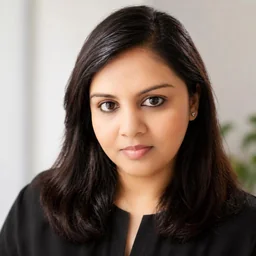
How Padmaja Ruparel co-founded Indian Angel Network, and made Indian angel investing into an institution
Before 2006, Indian angel investing was a private set of phone calls between a handful of senior operators. The Indian Angel Network turned it into a formal platform, with diligence, governance and a national chapter network.

It is easy now to take Indian angel investing for granted: a founder can pitch a structured deck, expect a syndicate to convene a diligence call, sign a SAFE or convertible, and have term-sheet language that resembles what they would see in Silicon Valley. None of that infrastructure was a given in 2006, when Padmaja Ruparel co-founded the Indian Angel Network (IAN) with Saurabh Srivastava, Raman Roy and a small group of senior Indian operators. Before that, the typical Indian angel cheque was an informal phone call between two people who had worked together at an IT services company or a consulting firm; there was no platform, no shared diligence, no portfolio reporting, and almost no record of who had invested in what.
Ruparel’s role across the next two decades has been to make this informal world into an institution. IAN is now the most-cited example of an Indian angel network at scale, with hundreds of investor members, a multi-city footprint that extends across India and abroad, and an associated venture-fund vehicle for follow-on investment in its strongest portfolio companies.
Early life
Padmaja Ruparel is from Delhi NCR. Her family background is professional rather than industrial, her public interviews mention growing up in a household where education was central and where work for women was assumed, not negotiated. She has occasionally described her early teenage instinct as wanting to start something of her own rather than join a corporate ladder, although the eventual path took her through several stages of operator and ecosystem work first.
Education
Ruparel holds a bachelor’s degree in commerce from a Delhi institution, with subsequent management training. Her credential is not the most-quoted line of her biography; what matters is the operating apprenticeship she undertook in the Indian software-and-services boom of the 1990s and early 2000s, which is where she developed the network and the ecosystem instinct that later became IAN’s competitive moat.
Career before Indian Angel Network
Before IAN, Ruparel worked at the intersection of policy, industry bodies and entrepreneurship support. She spent a meaningful part of her early career associated with India’s software industry body, the National Association of Software and Service Companies (NASSCOM), and with TiE (The Indus Entrepreneurs), the global Indian entrepreneur network founded in Silicon Valley with strong Indian chapters. That body of work put her in regular professional contact with the senior generation of Indian IT and outsourcing entrepreneurs, the people who would later become the first angel members of IAN. The lived insight she came away with is the one that shapes everything she built: Indian operators wanted to back the next generation, but lacked a vehicle that made it operationally feasible to do so as a group.
Why she co-founded Indian Angel Network
The idea behind IAN, in plain language, is that an individual angel is structurally limited, one investor, one diligence process, one cheque size, one relationship after investment, while a syndicate of angels, with shared diligence and a common operating playbook, can write better cheques, pick better companies and support them more effectively. Globally, the model was visible in groups like Band of Angels in Silicon Valley and London Business Angels; in India, the model had not been built. Ruparel and her co-founders set out to build it deliberately as a network rather than a fund, with members investing their own money on a deal-by-deal basis, IAN running the diligence and back-office, and the members collectively shaping the portfolio.
The deliberate choice of a network structure, rather than a pooled angel fund, was the structural insight. A network gives each angel control over their own deployment, which is what wealthy operators want; it gives founders access to a much wider group of potential investors per pitch; and it lets IAN aggregate diligence and reporting without taking on the regulatory burden of a fund vehicle. The follow-on venture-fund vehicle was added later, once the network had enough portfolio companies maturing into rounds that needed institutional cheques.
The early struggle
The first wall was deal flow that justified the structure. In 2006–2008, the Indian startup ecosystem was small enough that an angel network had to actively source companies, not just filter them. Ruparel’s public account is that the first three to five years of IAN were spent walking founders through what an angel round even meant, and walking angels through what serious early-stage diligence looked like. The second wall was the post-investment operating model: a portfolio company needs more than capital, and a network that promised “smart money” had to deliver it with mentor matching, board roles and follow-on coordination, none of which scale automatically.
The third wall was the long, slow exits problem. Angel investing only proves itself when the early portfolio produces exits, acquisitions or follow-on rounds that mark portfolio value, and in Indian early-stage investing, that loop runs over years, not quarters. IAN’s legitimacy as a platform was built by surviving the early phase of unproven returns while continuing to deepen the network of members and founders.
Funding & revenue
IAN does not raise capital in the venture-fund sense for its core angel-network activity; angel members invest their own money deal by deal, and the network earns fees on the platform and a share of upside in different forms. The associated venture-fund vehicle, the IAN Fund, raises institutional capital and invests alongside the angel members, allowing IAN to write larger and follow-on cheques. Specific figures for IAN Fund sizes and portfolio returns are partly disclosed in industry coverage but vary by source, and a precise number is not asserted here; the durable, verifiable facts are the network’s longevity, the size of its member base, the breadth of its portfolio across Indian and adjacent markets, and the addition of an institutional fund vehicle alongside the angel network.
Padmaja Ruparel’s net worth & ownership
There is no reliable, independently disclosed net-worth figure for Padmaja Ruparel. As a co-founder of an angel-network platform and an associated venture vehicle, the bulk of her economic interest sits in illiquid stakes in private portfolio companies, the platform itself, and her personal angel positions; estimator-site figures are speculative and not repeated here.
Indian Angel Network milestones timeline
- Early 2000s, Padmaja Ruparel works at the intersection of the Indian IT industry, NASSCOM and TiE, building deep relationships across the senior Indian operator community.
- 2006, Co-founds the Indian Angel Network with Saurabh Srivastava, Raman Roy and a small group of senior Indian operators.
- Late 2000s, IAN runs the first generation of structured angel diligence in Indian early-stage investing, building an investor and founder community across major Indian cities.
- 2010s, IAN expands into a multi-chapter network; launches an associated venture fund (IAN Fund) to make institutional follow-on investments alongside the angel members.
- Recent years, The IAN Group operates as a combined angel network and venture-fund platform, with hundreds of members and a portfolio spanning consumer, enterprise, deeptech and healthtech companies.
IAN business model
IAN’s business model has two layers. The first is the angel-network layer: the network sources, screens and runs diligence on early-stage Indian startups, and its members invest their own money deal by deal. The platform charges modest membership and processing fees and takes carry-like economics on the deals it intermediates. The second layer is the IAN Fund, which raises institutional capital and invests alongside the angel members, providing larger cheques, follow-on capacity and a more conventional venture economics structure (management fee plus carry). Together, the two layers let the same platform serve a founder from the first cheque to a Series A-sized investment without forcing them to switch ecosystems.
IAN competitors
The competitive set is now broad and was originally non-existent. On the angel side, IAN sits alongside other Indian angel networks and syndicate platforms that grew through the 2010s, as well as informal founder-syndicates that pool cheques. On the institutional side, IAN Fund competes with seed and pre-Series A venture funds across India. IAN’s structural advantage is its first-mover position and the network density that has compounded over almost two decades, a young founder who is admitted to an IAN pitch room is, in one session, addressing a far wider distribution of capital and operator relationships than any single venture firm represents.
Growth strategy
Three deliberate choices define the build. First, structure the platform as a network, not a fund, so individual angels keep agency and the platform’s coordination costs stay low. Second, add the institutional fund layer only after the network had organic deal flow worth backing with larger cheques, getting the order right kept the platform’s incentives clean. Third, treat the chapter network and member quality as the actual asset of the business; without serious operator-angels, IAN is just an event series, and the long, careful work of curating members is what makes the platform credible to founders.
Founder Snapshot
- Name
- Padmaja Ruparel
- Organisation
- Indian Angel Network (IAN) · IAN Fund
- Role
- Co-founder, Indian Angel Network; Founding Partner, IAN Fund
- Co-founders
- Saurabh Srivastava, Raman Roy and other senior operators
- Founded
- 2006
- Headquarters
- Delhi NCR; multi-chapter footprint across India and overseas
- Earlier roles
- Engagement with NASSCOM and TiE Delhi NCR in early-stage ecosystem work
- Sector
- Angel investing · Early-stage venture capital
What Padmaja Ruparel’s story teaches Indian founders
Two lessons travel forward. First, that the most durable platforms in any new market are the ones that formalise a behaviour that was already happening informally, IAN did not invent Indian angel investing; it gave it the diligence, governance and back-office that turned individual cheques into a platform. Second, that ecosystem work is patient work: the returns to building an institution show up a decade after the work begins, and the people who started the work in 2006 did so without knowing whether the loop would ever close. The willingness to put in that kind of time is rare, and it is the part of the story that founders, impatient by nature, usually under-rate.
Sources & verification
This profile is anchored only in publicly verifiable facts. Key claims are supported by:
- Padmaja Ruparel co-founded the Indian Angel Network in 2006 with Saurabh Srivastava and other senior Indian operators, IAN’s own corporate materials and consistent Indian business-press coverage (Economic Times, Forbes India, YourStory, Inc42, Mint).
- Earlier engagement with NASSCOM and TiE Delhi NCR in early-stage ecosystem and policy work, Profile features and interview-based coverage across multiple independent outlets.
- IAN operates a combined angel-network and venture-fund platform (IAN Fund) investing in early-stage Indian startups, IAN’s public materials and independent reporting on its portfolio and chapters.
Frequently asked questions about Padmaja Ruparel and Indian Angel Network
Who is Padmaja Ruparel?
Padmaja Ruparel is an Indian angel investor and the co-founder of the Indian Angel Network (IAN), which she helped start in 2006 with Saurabh Srivastava and other senior Indian operators. She is also a founding partner of IAN Fund, the associated venture-capital vehicle that invests alongside the network.
What is the Indian Angel Network?
The Indian Angel Network is one of India’s most established angel-investor platforms. It is a network, not a single fund, through which member investors back early-stage startups individually but share a common diligence and operating playbook. An associated venture fund (IAN Fund) makes larger institutional investments alongside the network.
When was IAN founded and where is it headquartered?
IAN was co-founded in 2006 and is headquartered in Delhi NCR with a multi-chapter footprint across major Indian cities and additional international chapters in selected markets.
What is Padmaja Ruparel’s net worth?
There is no reliable, publicly disclosed net-worth figure for Padmaja Ruparel. Most of her economic interest sits in illiquid stakes in private portfolio companies, the IAN platform and her personal angel positions, so any precise number is speculative and not repeated here.
What can founders learn from IAN’s story?
That the most durable platforms formalise behaviour that was already happening informally, and that ecosystem-building is patient work whose returns show up a decade after the work begins. Both lessons are easy to ignore in a startup culture that rewards speed.
More founder journeys: women in Indian venture capital · women founders in Delhi NCR · women founders in investing.
Your story could be next
Building a startup of your own?
We publish researched, permanent founder features like this one — profiles that keep ranking for your name and your company long after a social post fades. Sponsored placement, quoted per founder, with a guaranteed publish date.
Our newsletter
The Bright Story
If this one stayed with you, get the next one before chai — a single women-led story, researched and anchored only in verifiable facts. No noise, unsubscribe anytime.
Keep reading
Akkineni Keerthi built innopay into a fintech millions use, without raising a single rupee
Fintech · NeobankHow Mabel Chacko co-built Open into one of India’s fintech unicorns
Fintech · StartupsShanti Mohan left a long tech career to build the plumbing for Indian angel investing
Fintech · UnicornRuchi Kalra co-founded two profitable unicorns, and made Oxyzo one at its Series A
FintechUpasana Taku left PayPal in Silicon Valley to build MobiKwik in Delhi
Fintech · InclusionSucharita Mukherjee left investment banking to build money rails for India’s informal economy
More for founders
- Women-led startup directorySearch 100+ women-led Indian companies by industry, city, funding stage and year.
- VC directoryWhich funds invest in India, at what stage and cheque size, and who they’ve backed.
- Startup trends & dataLive charts of women-led startups in India — sectors, funding stages and cities.
- Free founder toolkit100+ directories, grants, PR, templates, AI tools and India’s schemes.
- Funding MatchFind the government funding you actually qualify for — in 60 seconds.
- Templates & checklistsPitch deck, cap table, term sheet and founders’ agreement.
Comments
No comments yet — be the first to add one.