
Founder Story · Fintech · Inclusion · Chennai
Sucharita Mukherjee left investment banking to build money rails for India’s informal economy
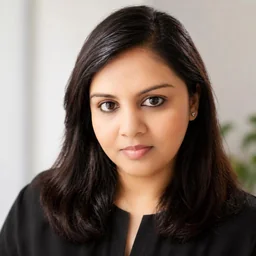
From structuring debt in London to co-founding Kaleidofin, she has spent her career trying to make finance work for customers banks were never designed to serve.

The customer at the centre of Sucharita Mukherjee’s career has no salary slip, no credit score and no predictable monthly income, a vegetable vendor, a domestic worker, a smallholder farmer, a daily-wage labourer. In India that is not a niche. It is the majority of the workforce. Formal finance is built to underwrite documented, regular income, so it simply does not see these people. Mukherjee has spent two decades building the parts of the system that would.
The customer banks were never built for
The structural problem is precise. A bank’s credit and savings products assume a borrower whose income arrives in known amounts on known dates, against documents the bank can verify. The informal worker’s cash flow is the opposite: lumpy, seasonal, undocumented, and shock-prone, a good month and a medical emergency can sit in the same fortnight. The result is not that these customers are “risky” so much as that they are illegible to the machinery. Everything Mukherjee has built is an attempt to make that customer legible without making finance predatory.
Education and the finance grounding
Mukherjee’s formation is in finance and management, but the more relevant education was the decade-plus she spent inside structured finance itself, the discipline of packaging, rating and selling cash-flow risk to institutional buyers. That technical fluency in how capital markets price and move risk is exactly what later let her argue, credibly, that the poor were mispriced rather than uncreditworthy.
From London structured finance to IFMR
She built an early career in global investment banking in London, working in structured finance and debt capital markets, widely reported to include roles at Morgan Stanley and Deutsche Bank. She then returned to India to lead IFMR Holdings (the IFMR Capital lineage that became Northern Arc Capital), where she helped pioneer the securitisation and structured-debt plumbing that channelled mainstream institutional money into microfinance institutions and NBFCs lending to low-income borrowers. This is the part of her story most people skip, and it is the most important: before she built a consumer company, she had already rebuilt the wholesale pipe that funds the bottom of the pyramid.
The insight: capital is not the same as a usable product
IFMR proved that institutional capital could reach the base of the pyramid at scale. What it exposed was the gap on the other end: that capital still did not arrive as products an informal household could actually use to save toward a goal, smooth a lumpy income, or absorb a shock. The money was getting to the last mile; usable financial tools were not. Kaleidofin was built to close that specific gap, the last-mile product problem, not the capital-supply problem she had already worked on.
Founding Kaleidofin
Mukherjee co-founded Kaleidofin in Chennai in 2017 with Puneet Gupta. Its core idea is “goal-based” finance: instead of selling a generic account or loan, it wraps savings, investment, credit and insurance around a customer’s actual objective, a child’s school fees, a lean-season buffer, a health cushion, and around the messy cash flow they really have rather than the salaried one banks assume. Crucially, it reaches customers through institutions that already touch them, microfinance lenders, cooperatives, business correspondents, rather than burning capital to acquire each low-value customer directly.
KScore and the move to infrastructure
The most strategically significant part of Kaleidofin is not the consumer product but the underwriting layer beneath it. To serve thin-file customers you must first be able to assess them, so the company built credit-scoring and decisioning capability (its KScore work) that uses alternative and cash-flow data to make informal customers underwritable. That turned Kaleidofin’s hardest internal problem into a product other lenders and institutions can buy, a B2B inclusion-infrastructure business sitting alongside the consumer one. It is the same pattern as her IFMR years: build the rails, not just the retail.
The hard part
This is the least forgiving segment in fintech. Distribution is expensive against tiny ticket sizes; trust takes years and is destroyed in one bad collection cycle; underwriting is non-standard by definition; and regulation is appropriately strict. The constant temptation is the predatory shortcut, repackage expensive credit, lend against desperation, book the spread. Refusing that while still building a viable business is the discipline the company has had to hold, and it is the reason the infrastructure bet matters: durable economics here come from being right about risk, not from being aggressive about price.
Funding
Kaleidofin has been backed by a mix of venture and impact / development-finance investors; reported backers include names associated with financial-inclusion capital such as Omidyar Network, Flourish Ventures, Oikocredit and British International Investment, alongside other inclusion-focused funds. The company has not disclosed a public valuation, and we do not print one. The verifiable arc is sustained backing from investors whose mandate is precisely inclusion, and steady expansion from a consumer product into the underwriting-infrastructure layer.
Startup timeline
- Pre-2017, Structured-finance career in London (reported: Morgan Stanley, Deutsche Bank); returns to India to lead IFMR Holdings, building securitisation and debt infrastructure for financial inclusion.
- 2017, Co-founds Kaleidofin in Chennai with Puneet Gupta to deliver goal-based financial products to informal-sector customers.
- After 2017, Scales distribution through partner institutions; builds alternative-data credit scoring (KScore) and a B2B inclusion-infrastructure business; raises successive venture and impact rounds.
Kaleidofin’s business model
Two reinforcing engines. The consumer engine delivers goal-based savings, credit and insurance to informal customers, distributed largely through partner institutions to keep acquisition costs viable. The infrastructure engine, credit scoring and decisioning for thin-file customers, is sold to lenders and institutions that need to underwrite the same segment. The consumer business creates the data and the credibility; the infrastructure business is how the model scales beyond what one consumer brand could reach.
Where Kaleidofin sits competitively
It operates among microfinance institutions, inclusion-focused NBFCs and a newer wave of inclusion fintechs, with Northern Arc occupying the adjacent debt-infrastructure space Mukherjee knows from her IFMR years. The differentiation is not lower prices, in this market that is usually a warning sign, but customer-centred product design plus an underwriting layer that makes the segment legible to other lenders. The competitive moat, if it holds, is data and decisioning, not distribution.
More founder journeys: women founders in fintech · women in fintech database · first-generation women founders.
Founder Snapshot
- Name
- Sucharita Mukherjee
- Company
- Kaleidofin (co-founder & CEO)
- Co-founder
- Puneet Gupta
- Earlier role
- CEO, IFMR Holdings (IFMR Capital / Northern Arc lineage)
- Founded
- 2017
- Headquarters
- Chennai, India
- Earlier career
- Structured finance, London (reported: Morgan Stanley, Deutsche Bank)
- Status
- Privately held
- Sector
- Financial inclusion / fintech
What Sucharita Mukherjee’s story teaches founders
Two patterns travel. First: solving a problem one layer up the stack tends to reveal the real problem one layer down, fixing wholesale capital at IFMR is what exposed the unsolved last-mile product gap that became Kaleidofin. Second: in a mission market, the durable business is the boring infrastructure one. The consumer product earns the trust and the data; the underwriting layer is what lets the mission scale and what competitors cannot quickly copy. The ethical path and the defensible path turn out to be the same path.
Frequently asked questions about Sucharita Mukherjee
Who is Sucharita Mukherjee?
Sucharita Mukherjee is an Indian financial-inclusion entrepreneur, co-founder and CEO of Kaleidofin. She built an early career in structured finance in London, then led IFMR Holdings, the IFMR Capital / Northern Arc lineage that pioneered channelling institutional capital to lenders serving the poor, before co-founding Kaleidofin in 2017 with Puneet Gupta to build usable financial products for informal-sector customers.
What does Kaleidofin do?
Kaleidofin provides goal-based savings, credit and insurance designed around the irregular cash flows of informal-sector customers, distributed largely through partner institutions, and also runs a B2B layer, alternative-data credit scoring and decisioning (KScore), that helps other lenders underwrite the same thin-file segment.
What is Sucharita Mukherjee’s net worth?
Kaleidofin is privately held and has not disclosed a valuation, so there is no public net-worth figure for Sucharita Mukherjee; her stake is a private founder holding rather than a listed, market-priced one.
What can founders learn from Sucharita Mukherjee?
That fixing one layer of a system exposes the harder layer beneath it, and that in inclusion finance the durable advantage is the underwriting infrastructure, not the consumer interface, the disciplined, non-predatory path is also the only structurally defensible one.
Your story could be next
Building a startup of your own?
We publish researched, permanent founder features like this one — profiles that keep ranking for your name and your company long after a social post fades. Sponsored placement, quoted per founder, with a guaranteed publish date.
Our newsletter
The Bright Story
If this one stayed with you, get the next one before chai — a single women-led story, researched and anchored only in verifiable facts. No noise, unsubscribe anytime.
Keep reading
Akkineni Keerthi built innopay into a fintech millions use, without raising a single rupee
Fintech · NeobankHow Mabel Chacko co-built Open into one of India’s fintech unicorns
Fintech · StartupsShanti Mohan left a long tech career to build the plumbing for Indian angel investing
Fintech · UnicornRuchi Kalra co-founded two profitable unicorns, and made Oxyzo one at its Series A
FintechUpasana Taku left PayPal in Silicon Valley to build MobiKwik in Delhi
Fintech · Asset MgmtRadhika Gupta co-founded a quant fund, sold it to Edelweiss, then ran the whole fund house
More for founders
- Women-led startup directorySearch 100+ women-led Indian companies by industry, city, funding stage and year.
- VC directoryWhich funds invest in India, at what stage and cheque size, and who they’ve backed.
- Startup trends & dataLive charts of women-led startups in India — sectors, funding stages and cities.
- Free founder toolkit100+ directories, grants, PR, templates, AI tools and India’s schemes.
- Funding MatchFind the government funding you actually qualify for — in 60 seconds.
- Templates & checklistsPitch deck, cap table, term sheet and founders’ agreement.
Comments
No comments yet — be the first to add one.