
Founder Story · D2C · Setback · Bengaluru
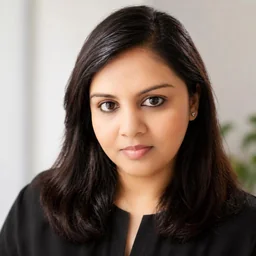
Shubhra Chadda built Chumbak from a fridge magnet, and learned, the hard way, what scaling design retail in India costs
Founded in 2010 with Vivek Prabhakar, Chumbak put a recognisable Indian-design point of view onto fridge magnets, mugs, bags and home goods. Its second decade was harder than its first.

In 2010, an Indian souvenir was usually a small, regionally sourced object, a Taj Mahal keychain at the airport, an Akshardham snow globe at a craft fair. Shubhra Chadda and her husband Vivek Prabhakar made a different bet. India had a strong visual identity, a deep design tradition and a growing urban consumer who would happily pay for thoughtfully designed objects that did not look like generic exports. Chumbak, literally, “magnet”, was their answer.
From a fridge magnet to a national retailer
The first Chumbak product was a fridge magnet. Within a few years, the brand expanded into bags, mugs, kitchen accessories, journals, apparel and home furnishings, all rendered in a recognisable Indian-pop visual style. Stores opened in malls and airports across India, with online retail layering on top.
For Indian D2C, Chumbak was an early proof point. It made the case that Indian consumers wanted designed lifestyle goods with a clear point of view, that they would pay premiums for them, and that the supply chain could be built domestically.
Venture capital and the scale curve
Chumbak was bootstrapped initially, the founders famously sold their Bengaluru home to raise early working capital, before bringing in institutional investors. Seedfund backed the company around 2012; Matrix Partners India joined in 2014. In November 2017, Gaja Capital led a Series C of around US$13 million (roughly INR 70 crore), with Matrix and Seedfund continuing to participate. The capital fuelled an aggressive scale-up of retail and category expansion through the late 2010s.
Like many Indian D2C and lifestyle brands of that vintage, Chumbak then ran into the difficult second decade. Rising retail rents, the economics of multi-category lifestyle stores, online margin compression and the shock of the pandemic combined to put serious pressure on the model.
The GOAT Brand Labs deal
In January 2023, D2C aggregator GOAT Brand Labs announced that it had acquired a majority stake in Chumbak alongside four other Indian D2C brands. GOAT was reported as taking roughly an 80% stake; the headline price was not disclosed but Indian business press estimates put the deal in the INR 100–120 crore range. Shubhra Chadda and Vivek Prabhakar publicly welcomed the transaction as a next-phase partnership rather than an exit, and GOAT laid out a target of taking the brand to INR 500 crore in revenue by 2025.
For founders watching from outside, the Chumbak arc is worth studying as a category lesson rather than as an individual indictment. Multi-category lifestyle retail at venture-backed scale is, structurally, one of the harder businesses to build in India, and a roll-up exit to a brand aggregator is now an increasingly common end-state for Indian D2C of the 2010s vintage.
The case for the design-led founder
What makes Chumbak distinctive even now is the consistency of its visual identity. The brand looked like itself, and almost nothing else, for over a decade. That kind of coherence is rare in Indian consumer goods, where the temptation to chase whichever silhouette is selling that quarter is high.
Shubhra Chadda’s defining contribution, more than the financial outcomes, is probably this: she helped prove that an Indian D2C brand could be designed, not just assembled.
“Building a brand is not the hard part. Keeping it recognisable through fifteen years of trends is.”
What founders can take from the Chumbak story
The Chumbak story is a useful test of how Indian founder coverage handles second-decade companies. The first decade is the part everyone wants to write about. The second is where most companies actually become themselves.
For founders building in design, lifestyle or any taste-led category, the broader lesson is structural. Multi-category retail at scale tends to amplify the difficulty of any one category’s margin problem. Choosing fewer SKUs, deeper depth and tighter unit economics is often a slower path with a better long-term ending.
Why design-led D2C is harder than it looks
Design-led D2C looks deceptively simple from the outside. The hard parts, the parts that consume founders, are operational. Maintaining a consistent visual identity across hundreds of SKUs as the catalogue expands; managing the long tail of inventory across home, accessories, apparel and gifting; renegotiating retail rents every cycle; keeping the brand looking fresh without losing recognisability; all of these have to be solved week after week. Chumbak’s first decade was a working tutorial in how those operational questions accumulate, and how multi-category lifestyle retail at venture-backed scale amplifies them.
Founder Snapshot
- Name
- Shubhra Chadda
- Co-founder
- Vivek Prabhakar (husband)
- Company
- Chumbak Design
- Founded
- 2010, Bengaluru
- Headquarters
- Bengaluru, India
- Sector
- Indian-design lifestyle, home, accessories, apparel, retail
- Notable backers
- Seedfund (~2012); Matrix Partners India (2014); Gaja Capital (Series C, ~US$13 million, Nov 2017)
- Acquired
- January 2023, GOAT Brand Labs takes majority stake (reported ~80%); deal value undisclosed (Indian press estimates ~INR 100–120 crore)
Frequently asked questions about Shubhra Chadda
Who founded Chumbak?
Chumbak was co-founded in 2010 by Shubhra Chadda and her husband Vivek Prabhakar in Bengaluru. The bet was that India had a strong visual identity, a deep design tradition, and a growing urban consumer who would pay for thoughtfully designed objects that did not look like generic souvenir exports. The first Chumbak product was a fridge magnet, literally, the “chumbak” the brand was named after.
How did Chumbak evolve from a fridge-magnet brand?
Within a few years, the brand expanded into bags, mugs, kitchen accessories, journals, apparel and home furnishings, all rendered in a recognisable Indian-pop visual style. Stores opened in malls and airports across India, with online retail layering on top. For Indian D2C, Chumbak was an early proof point that Indian consumers would pay premiums for designed lifestyle goods with a clear visual point of view, and that the supply chain could be built domestically. The brand looked like itself, and almost nothing else, for over a decade.
What is the company’s current situation?
Chumbak raised venture funding from Seedfund, Matrix Partners India and (in a 2017 Series C of around US$13 million) Gaja Capital, and scaled retail aggressively through the late 2010s. Like many Indian D2C and lifestyle brands of that vintage, it then ran into a difficult second decade, rising retail rents, the economics of multi-category lifestyle stores, online margin compression and the pandemic shock combined to put serious pressure on the model. In January 2023, D2C aggregator GOAT Brand Labs acquired a majority stake (reported at around 80%) in Chumbak for an undisclosed amount widely reported to be in the INR 100–120 crore range, alongside four other D2C brands. Shubhra Chadda and Vivek Prabhakar publicly welcomed the transaction as the next phase for the brand.
What is the structural lesson here?
Multi-category lifestyle retail at venture-backed scale is, structurally, one of the harder businesses to build in India, rising retail rents and online margin compression amplify the difficulty of any single category’s margin problem. The Chumbak story is a useful test of how Indian founder coverage handles second-decade companies: the first decade is the part everyone wants to write about, but the second is where most companies actually become themselves. For founders building in design, lifestyle or any taste-led category, choosing fewer SKUs, deeper depth and tighter unit economics is often a slower path with a better long-term ending.
What is Shubhra Chadda’s net worth?
There is no net-worth figure for Shubhra Chadda from a reputable, independently-verifiable source. Chumbak’s retail and brand business was sold off and the founders later exited; no credible personal net-worth figure is on the public record. The numbers that appear on celebrity or “net worth” aggregator sites are unsourced and inconsistent, so, in line with our editorial policy,
Your story could be next
Building a startup of your own?
We publish researched, permanent founder features like this one — profiles that keep ranking for your name and your company long after a social post fades. Sponsored placement, quoted per founder, with a guaranteed publish date.
Our newsletter
The Bright Story
If this one stayed with you, get the next one before chai — a single women-led story, researched and anchored only in verifiable facts. No noise, unsubscribe anytime.
Keep reading
How Sahar Mansoor built Bare Necessities as a zero-waste company, not a green label
D2C · FoodsSuhasini Sampath built Yogabar with her sister, and signed a 100% acquisition with ITC
D2C · JewelleryChinu Kala left home at 15 and sold goods door to door, then built a jewellery brand
D2C · Home AppliancesGazal Kalra co-founded Rivigo, India’s first trucking unicorn, on a promise to get drivers home every night
D2C · Sleep & ComfortPriyanka Salot couldn’t sleep as a new mother, so she built The Sleep Company around a polymer grid
D2C · JewellerySaloni Chopra grew up among Jaipur jewellers and built Trisu in her parents' name
More for founders
- Women-led startup directorySearch 100+ women-led Indian companies by industry, city, funding stage and year.
- VC directoryWhich funds invest in India, at what stage and cheque size, and who they’ve backed.
- Startup trends & dataLive charts of women-led startups in India — sectors, funding stages and cities.
- Free founder toolkit100+ directories, grants, PR, templates, AI tools and India’s schemes.
- Funding MatchFind the government funding you actually qualify for — in 60 seconds.
- Templates & checklistsPitch deck, cap table, term sheet and founders’ agreement.
Comments
No comments yet — be the first to add one.