
Founder Story · D2C · Sustainability · Bengaluru
How Sahar Mansoor built Bare Necessities as a zero-waste company, not a green label
A Cambridge-trained sustainability professional who decided the credible move was to live the thesis, and sell it.

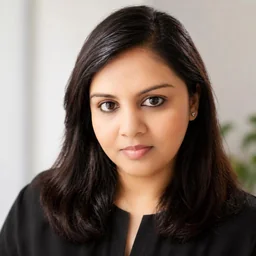
Sahar Mansoor is best known for a personal claim that doubles as the brand thesis: she has spoken about fitting much of her annual non-biodegradable waste into a small jar. Bare Necessities exists to turn that lived zero-waste philosophy into products other people can actually buy.
Early life
The through-line in Sahar Mansoor’s story is an early conviction that environmental responsibility had to be lived, not just advocated. That personal-accountability framing, later dramatised by her widely repeated claim of fitting much of a year’s non-biodegradable waste into a single jar, is not a marketing flourish bolted on afterwards; it predates the company and explains why the brand is structured the way it is.
Education
Mansoor studied at the University of Cambridge, with an academic grounding in environmental policy and sustainability, and went on to work with international and social-enterprise organisations in the space. This matters commercially, not just biographically: in a category crowded with “natural” and “green” marketing claims that rarely survive scrutiny, a genuine policy-and-practice credential is the scarce asset. It lets the brand make sustainability claims it can actually defend, the differentiator in a market where most green positioning is unverifiable.
Career before Bare Necessities
Before founding the company she worked in sustainability-focused and social-enterprise roles internationally, including exposure to global environmental institutions. That career shaped Bare Necessities as a practitioner-led venture rather than a consumer-marketing play that discovered sustainability as a positioning angle. The distinction is the whole strategy: the founder is the proof, and the proof is what a sceptical, greenwashing-weary buyer is actually paying for.
Why she started Bare Necessities
The gap she identified was specific. India had abundant “natural” personal-care marketing but very little genuinely zero-waste, plastic-free product backed by an end-to-end circular philosophy, sourcing, packaging, and disposal all designed to minimise waste, not just the formulation. Bare Necessities, founded in 2016 in Bengaluru, was built as a company that practises the thesis rather than asserting it: products, plus an education and circular-economy practice that makes the philosophy legible to customers and institutions.
The early struggle
Zero-waste is structurally expensive in ways that fight the market. Plastic-free packaging, ethical sourcing and small-batch production raise unit costs precisely when the mass alternatives are cheap and convenience-optimised, and price-sensitive Indian consumers do not automatically pay a green premium. The hard, ongoing discipline is refusing the obvious margin shortcut, quietly compromising on packaging or sourcing while keeping the “zero-waste” language, because in this category the moment the promise is diluted, the only real differentiator is gone.
Funding & revenue
Bare Necessities has grown largely as a mission-led, capital-efficient and bootstrapped-leaning business, monetising through products plus circular-economy education and consulting rather than aggressive venture scaling. That financing choice is itself strategic: outside growth capital usually comes with a scale mandate, and rapid scale in zero-waste tends to force exactly the sourcing and packaging compromises the brand exists to avoid. Specific revenue and any external-investment figures are not consistently public.
Bare Necessities startup timeline
- Pre-2016, Cambridge sustainability education; work with international and social-enterprise organisations.
- 2016, Founds Bare Necessities in Bengaluru as a zero-waste personal-care and circular-economy company.
- Following years, Expands the plastic-free product range, builds the education/consulting practice, and becomes a recognised public voice in Indian sustainability.
Bare Necessities business model
Two reinforcing revenue lines. The first is plastic-free personal-care and home products sold direct to consumers on product margin. The second, circular-economy education and consulting, is higher-margin, builds the credibility that sells the products, and diversifies the company away from pure thin-margin physical retail. The model is deliberately margin-disciplined and not hyper-scaled on venture capital, because the second line is what makes the first defensible.
Bare Necessities competitors
In clean and sustainable personal care it operates near brands such as Juicy Chemistry and The Switch Fix, among other plastic-free or natural-positioned players, and against a much larger backdrop of mass brands that market “natural” without a verifiable zero-waste supply chain. The competitive risk is less direct rivalry than category dilution: when large incumbents adopt green language, a small brand’s only durable edge is provable, end-to-end practice, which is precisely what the education arm and the founder’s record supply.
Growth strategy
Three deliberate choices. Lead with practitioner credibility, since in a greenwashing-saturated category the founder living the thesis is the strongest and least copyable claim. Pair products with an education/consulting line that is both a higher-margin business and the trust engine for the products. And grow within capital discipline rather than chasing scale that would force the sourcing and packaging compromises that would void the brand’s entire premise.
Founder Snapshot
- Name
- Sahar Mansoor
- Company
- Bare Necessities
- Founded
- 2016
- Headquarters
- Bengaluru, India
- Education
- University of Cambridge (environmental policy / sustainability)
- Status
- Privately held; mission-led / capital-efficient
- Sector
- D2C sustainability / personal care
What Sahar Mansoor’s story teaches Indian founders
That in mission categories, founder credibility is the product’s strongest claim, and that capital discipline can be a feature, not a limitation, when scale would force you to break the promise the brand is built on.
Frequently asked questions about Sahar Mansoor
Who is Sahar Mansoor?
Sahar Mansoor is an Indian sustainability entrepreneur and the founder of Bare Necessities, a zero-waste personal-care and circular-economy company. She has a University of Cambridge sustainability background and is known for living the low-waste philosophy the brand sells.
What is Sahar Mansoor’s net worth?
This is a privately held company, so there is no disclosed valuation or public net-worth figure; the founder’s stake is a private holding rather than a listed, market-priced one.
What does Bare Necessities do?
Bare Necessities makes plastic-free personal-care and home products sold direct to consumers, alongside circular-economy education and consulting.
What can founders learn from Sahar Mansoor?
That founder credibility is the strongest claim in mission categories, and that capital discipline can be a feature, scale that forces breaking the brand’s promise is not growth.
More founder journeys: women founders in D2C · women in D2C database · bootstrapped women founders · women founders in Bengaluru.
Your story could be next
Building a startup of your own?
We publish researched, permanent founder features like this one — profiles that keep ranking for your name and your company long after a social post fades. Sponsored placement, quoted per founder, with a guaranteed publish date.
Our newsletter
The Bright Story
If this one stayed with you, get the next one before chai — a single women-led story, researched and anchored only in verifiable facts. No noise, unsubscribe anytime.
Keep reading
Suhasini Sampath built Yogabar with her sister, and signed a 100% acquisition with ITC
D2C · JewelleryChinu Kala left home at 15 and sold goods door to door, then built a jewellery brand
D2C · SetbackShubhra Chadda built Chumbak from a fridge magnet, and learned, the hard way, what scaling design retail in India costs
D2C · Home AppliancesGazal Kalra co-founded Rivigo, India’s first trucking unicorn, on a promise to get drivers home every night
D2C · Sleep & ComfortPriyanka Salot couldn’t sleep as a new mother, so she built The Sleep Company around a polymer grid
D2C · JewellerySaloni Chopra grew up among Jaipur jewellers and built Trisu in her parents' name
More for founders
- Women-led startup directorySearch 100+ women-led Indian companies by industry, city, funding stage and year.
- VC directoryWhich funds invest in India, at what stage and cheque size, and who they’ve backed.
- Startup trends & dataLive charts of women-led startups in India — sectors, funding stages and cities.
- Free founder toolkit100+ directories, grants, PR, templates, AI tools and India’s schemes.
- Funding MatchFind the government funding you actually qualify for — in 60 seconds.
- Templates & checklistsPitch deck, cap table, term sheet and founders’ agreement.
Comments
No comments yet — be the first to add one.