
Founder Story · Beauty · Inclusive · Mumbai
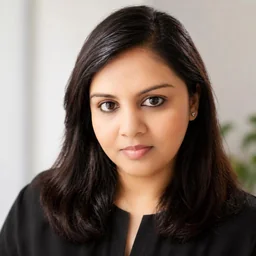
Karishma Kewalramani Built FAE Beauty to Make Makeup More Inclusive
Roughly three in four Indian women have brown to deep brown skin, and the counters were stocked for the rest. She left consulting in San Francisco to build the brand that stopped pretending otherwise.
Karishma Kewalramani opens her pitch with a statistic that ought to have embarrassed the Indian beauty industry into changing years earlier. About 74 percent of Indian women fall into the brown, dark brown or intense brown skin categories. Walk into almost any cosmetics store in the country and the foundation shades on offer are weighted heavily toward fair skin, which is to say toward the minority.
This is not an oversight. It is the commercial residue of a long preference for fairness that Indian advertising spent decades reinforcing, most visibly through an entire product category built on the promise of lighter skin. The shade racks were the physical evidence of a market that had decided which faces it was for.
FAE Beauty, which Kewalramani launched in Mumbai in August 2019, was built as the counter-argument. The name is an acronym, Free And Equal, and the brand's positions follow from it. Formulations shaded for Indian skin tones and undertones, and campaign imagery that is not retouched to lighten anybody. It has since raised about 17 crore rupees and secured a deal on Shark Tank India.
The consultant who was also a makeup artist
Kewalramani arrived at beauty from two directions at once, which turns out to explain a lot about the company. She is a trained makeup artist, so she understands pigment, texture and what actually happens when a product meets a face. She also built a management consulting career in San Francisco, reported to have been at A.T. Kearney, where her client work included beauty brands.
That combination is unusual and useful. Plenty of beauty founders have taste without operational rigour, and plenty of consultants have spreadsheets without any feel for the product. She had seen the category from inside the boardrooms where large brands decide which shades are worth manufacturing, and she had also stood in front of real faces trying to match a colour that the market had never produced.
Underneath the professional history sat something more personal. Kewalramani has spoken about growing up with colorism, with the self-doubt it produces, and with an absence of representation in the products and advertising around her. Founders often reach for a personal origin story because it makes better copy. In this case the personal experience and the market gap are the same fact viewed from two distances, which is why the brand's positioning has held up rather than reading as a campaign.
Leaving a career to start in a crowded category
She began working on FAE in early 2018 and launched in August 2019, funding the start with her own savings alongside support from friends, family and mentors. Leaving a consulting salary in San Francisco to bootstrap a cosmetics brand in India is a substantial bet, and the timing made it more so. By 2019 Indian D2C beauty was already busy. Nykaa had made the category investable, SUGAR and Mamaearth were scaling fast, and new brands were launching constantly.
Entering that market with better packaging or a slightly different formula would have been pointless. What she had instead was a position nobody had properly claimed. Not natural, not clean, not luxury, but inclusive, in a country where inclusivity in beauty was still mostly an imported conversation. The gap was large precisely because addressing it meant contradicting the aesthetic the industry had spent decades selling.
The Lip Whip, and a smart answer to the shade problem
FAE's hero product is the Lip Whip, a buildable matte lipstick that has become the brand's bestseller and the clearest expression of its thinking. Its trick is that it adapts. The colour interacts with the wearer's own lip and skin tone, so one shade reads differently on different people rather than sitting on top of everyone identically. It also doubles as a blush and an eyeshadow.
Look at what that solves commercially. The honest way to serve a wide range of complexions is an enormous shade range, which for a young brand means punishing inventory economics, dozens of stock-keeping units and slow-moving shades tying up capital. A product that adjusts to the wearer delivers a version of the same inclusivity without the same inventory burden. It is a genuinely elegant piece of product strategy, and it is the kind of solution you only find if you understand both formulation and unit economics.
Around the hero product the range has grown into skincare-infused formulations, with the argument that makeup should look after the skin it sits on through a long humid Indian day. The brand is also vegan and cruelty-free, which places it alongside the wider clean-beauty shift without making that the headline.
The no-Photoshop policy
The most quietly radical thing FAE does is refuse to retouch skin. The brand runs a no-Photoshop policy, showing real skin, real texture and real people in its imagery. Kewalramani's stated frustration was watching actresses appear in beauty campaigns looking noticeably lighter and brighter than they are in life.
It is worth being precise about why this matters commercially rather than only morally. If your entire proposition is that you make products for skin the industry ignored, then lightening your models in post-production destroys the proposition at the exact moment a customer encounters it. She would see a promise of inclusivity illustrated by the same lightened faces she has always seen. The no-retouching rule is the proof of the claim, and for a brand whose competitive advantage is credibility with a specific audience, that proof is the asset.
It also costs something. Unretouched imagery in a category where every competitor smooths and lightens can look less polished at first glance. Holding the line anyway is what separates a positioning from a slogan.
Funding, Shark Tank and the numbers
FAE Beauty raised about 17 crore rupees, roughly 2 million dollars, in a round led by Spring Marketing Capital, an investor that has backed several Indian consumer brands and which also appears on the cap table of other D2C names. The brand later appeared on season 4 of Shark Tank India, where it secured a reported 1 crore rupees for 1.5 percent equity from Aman Gupta of boAt and Namita Thapar of Emcure.
Shark Tank is worth more than the cheque for a consumer brand at this stage. The equity given up was small, and the exposure reaches an audience that no reasonable performance-marketing budget could buy. For a brand whose entire argument is about representation, a national television platform to make that argument is close to ideal distribution.
On scale, reported revenue for FY25 is around 2.45 million dollars. That is a real business rather than a hobby, and it is also still small relative to the large Indian beauty names. The honest read is a brand that has proven its proposition and its product, and is now in the harder phase of turning a clear position into national distribution against much better-funded competitors.
Founder Snapshot
- Name
- Karishma Kewalramani
- Company
- FAE Beauty (Free And Equal)
- Role
- Founder
- Founded
- Work began early 2018; launched August 2019
- Headquarters
- Mumbai, India
- Sector
- Inclusive colour cosmetics, D2C beauty
- Background
- Trained makeup artist; management consulting career in San Francisco, reported at A.T. Kearney, with beauty-brand clients
- Hero product
- Lip Whip, a buildable matte lipstick that adapts to the wearer’s own tone and doubles as blush and eyeshadow
- Positioning
- Shades for Indian skin tones and undertones; vegan and cruelty-free; a no-Photoshop imagery policy
- Funding
- About 17 crore rupees (roughly 2 million dollars) led by Spring Marketing Capital; 1 crore rupees for 1.5 percent on Shark Tank India season 4 from Aman Gupta and Namita Thapar
- Reported revenue
- About 2.45 million dollars in FY25
Karishma Kewalramani’s net worth and ownership
There is no verified public net-worth figure for Karishma Kewalramani. FAE Beauty is a private company. The Shark Tank India deal, at 1 crore rupees for 1.5 percent, implies a valuation for that particular transaction, but a televised negotiation is not the same as a priced institutional round, and the larger raise led by Spring Marketing Capital did not disclose its valuation.
Her shareholding after these rounds has not been made public. She founded the brand with her own savings and support from people close to her, so she is likely to retain a meaningful stake, but that is an inference and not a number, and this piece will not pretend otherwise. Any specific figure attached to her name online is unverified.
What Karishma Kewalramani’s story teaches Indian founders
The first lesson is that a crowded category is not the same as a full one. Indian D2C beauty in 2019 looked saturated, and by volume it was. What it did not have was anybody seriously serving the majority of Indian complexions. Saturation is usually measured in brands rather than in customer segments, and the two are very different things. The unserved segment here was not a niche, it was most of the country.
The second is that a position has to cost you something to be worth anything. Any brand can say it is inclusive. FAE built the claim into things that are expensive or awkward to fake, a shade approach designed around Indian undertones and a refusal to retouch skin in its imagery. Competitors can copy a tagline in an afternoon. Copying a policy that makes your campaigns look less conventionally polished requires actually believing it.
The third concerns the founder's own composition. The Lip Whip exists because someone understood both how pigment behaves on different skin and why a young brand cannot carry forty stock-keeping units. That solution came from a makeup artist who had also been a consultant. Founders are often told to specialise. Sometimes the whole opportunity sits in the overlap between two things you happen to know well.
Frequently asked questions about Karishma Kewalramani and FAE Beauty
Who is Karishma Kewalramani?
Karishma Kewalramani is the founder of FAE Beauty, an inclusive makeup brand based in Mumbai. A trained makeup artist, she built a management consulting career in San Francisco, reported to have been at A.T. Kearney, where her clients included beauty brands. She began working on FAE in early 2018 and launched it in August 2019.
What does FAE Beauty stand for?
FAE stands for Free And Equal. The name describes the positioning, which is makeup formulated and shaded for Indian skin tones and undertones rather than adapted from ranges designed for fairer skin, sold with imagery that is not retouched to lighten the models.
What is the Lip Whip?
The Lip Whip is FAE’s hero product and bestseller, a buildable matte lipstick that interacts with the wearer’s own lip and skin tone, so a single shade reads differently on different people. It doubles as a blush and eyeshadow, which is part of how the brand delivers wide-ranging wearability without carrying an enormous shade inventory.
How much funding has FAE Beauty raised?
About 17 crore rupees, roughly 2 million dollars, in a round led by Spring Marketing Capital. The brand also secured an investment on Shark Tank India season 4, reported as 1 crore rupees for 1.5 percent equity from Aman Gupta and Namita Thapar. Reported revenue for FY25 is around 2.45 million dollars.
What is FAE Beauty’s no-Photoshop policy?
FAE does not retouch skin in its campaign imagery, showing real skin, real texture and real people. Kewalramani has said she was frustrated by beauty campaigns in which models and actresses appear noticeably lighter and brighter than they are in life, which would undercut the brand’s entire proposition.
What is Karishma Kewalramani’s net worth?
There is no verified public net-worth figure. FAE Beauty is private, and while the Shark Tank India deal implies a valuation for that transaction, the larger round did not disclose one and her shareholding has not been made public. Any specific figure circulating online is unverified.
Your story could be next
Building a startup of your own?
We publish researched, permanent founder features like this one — profiles that keep ranking for your name and your company long after a social post fades. Sponsored placement, quoted per founder, with a guaranteed publish date.
Our newsletter
The Bright Story
If this one stayed with you, get the next one before chai — a single women-led story, researched and anchored only in verifiable facts. No noise, unsubscribe anytime.
Keep reading
Natasha Tuli was an architect who started making soap, and built one of India's clean-beauty pioneers before the category had a name
BeautyFalguni Nayar walked out of a top banking job at 50, and built Nykaa into a listed beauty giant
BeautyVineeta Singh turned down a ₹1 crore offer, and built SUGAR Cosmetics
Beauty · HaircareNikita Khanna found her own curls in lockdown and built Moxie Beauty for the hair India actually has
Beauty · SkincareMalini Adapureddy started Deconstruct in her garage and grew it into a 200 crore skincare brand
Beauty · OrganicMegha Asher built Juicy Chemistry into India’s first certified organic beauty brand
More for founders
- Women-led startup directorySearch 100+ women-led Indian companies by industry, city, funding stage and year.
- VC directoryWhich funds invest in India, at what stage and cheque size, and who they’ve backed.
- Startup trends & dataLive charts of women-led startups in India — sectors, funding stages and cities.
- Free founder toolkit100+ directories, grants, PR, templates, AI tools and India’s schemes.
- Funding MatchFind the government funding you actually qualify for — in 60 seconds.
- Templates & checklistsPitch deck, cap table, term sheet and founders’ agreement.
Comments
No comments yet — be the first to add one.