
Founder Story · D2C · Nutrition · Mumbai
How Aarti Gill built OZiva, and sold the majority to Hindustan Unilever
A plant-based nutrition brand built for a market that didn’t yet trust supplements, and a rare D2C exit to a consumer-goods giant.

Most Indian D2C founder stories end with “raised another round.” Aarti Gill’s ends, unusually, with a strategic acquirer: Hindustan Unilever took a majority stake in OZiva, the plant-based nutrition brand she co-founded with Mihir Gadani, one of the clearer D2C-to-FMCG outcomes India has produced. That ending is not luck; it is the logical destination of the way the company was built, and reading the story backwards from it explains every earlier decision.
A quantitative founder in a claims-heavy category
Gill came to consumer brands from an engineering-and-MBA, analytically trained background rather than from marketing, and she has publicly credited that formation with shaping OZiva’s science-and-data-led identity. This is competitively material, not biographical colour. Nutrition is a category where every brand claims to be “clean” and “effective”; the differentiator is whether the founder actually thinks in evidence and formulation rather than in influencers and packaging. OZiva’s “clean-label, evidence-led” positioning is downstream of how its founder reasons, which is why it reads as credible to a sceptical buyer instead of as another wellness slogan.
The second-time-operator advantage
Before OZiva, Gill worked in analytical and business roles and ran an earlier venture, and that prior operating experience is the underrated input in this story. Nutrition D2C is merciless about operational naivety: inventory and shelf-life risk, regulatory exposure on health claims, the cost of acquiring a distrustful customer, and an economic model that only works on repeat purchase. A second-time operator enters that minefield with fewer fatal blind spots, which is part of why OZiva built durable repeat behaviour rather than burning capital on one-time, ad-driven trial.
Why OZiva existed: the missing middle
The gap was trust, structurally defined. Indian nutrition was polarised: at one pole, clinical, male-coded sports supplements; at the other, unverified “traditional” or grey-market products. Between them sat almost nothing science-led, plant-based and brand-trusted, and that missing middle skewed female and mainstream, a large audience neither pole spoke to or earned trust from. OZiva was built deliberately for that centre: clean-label plant nutrition (protein, daily nutrition, hair-and-skin nutrition) for the customer the existing market structurally ignored.
The hard part: trust does not respond to ad spend
Nutrition is low-trust, claims-sensitive and regulation-sensitive, which makes it one of the few consumer categories where performance marketing alone actively fails. You can buy first trial with ads, but in a category where the customer is rationally sceptical, growth without earned credibility does not compound and does not survive scrutiny, it churns. The slow, hard work was therefore the unfashionable kind: clean labels, defensible formulations, transparent communication and demonstrated repeat purchase. That is precisely the asset that later made OZiva acquirable rather than merely large.
The HUL acquisition as strategy, not exit
OZiva raised multiple venture rounds as it scaled across its own site, marketplaces and modern retail, and in 2024 Hindustan Unilever acquired a majority stake, widely reported as a controlling investment with a path to fuller ownership. We do not print round or revenue figures the public record does not consistently support; the strategically important fact is the shape of the outcome. Distribution, physical shelf reach, is the structural ceiling for nutrition D2C, the one cost a venture-funded brand cannot self-fund to FMCG scale. Selling control to a distribution giant is a coherent way through that ceiling, not a failure to IPO; the credibility OZiva built is exactly what made it worth a strategic acquirer’s capital.
OZiva startup timeline
- 2016, OZiva co-founded by Aarti Gill and Mihir Gadani.
- 2016–2023, Scales plant-based nutrition across D2C, marketplaces and retail; raises successive venture rounds.
- 2024, Hindustan Unilever acquires a majority stake in OZiva.
OZiva business model
A clean-label plant-nutrition brand earning product margin across protein, daily-nutrition and beauty-nutrition lines, sold through its own channel, marketplaces and retail, now with FMCG distribution muscle behind it post-HUL. The pre-acquisition model proved demand and trust; the acquisition supplies the one thing D2C economics structurally cannot self-fund at scale: physical distribution reach.
OZiva competitors
In Indian nutrition and wellness it competes with HealthKart/MuscleBlaze (performance-led), Kapiva (Ayurveda-led), and newer clean-label players such as Plix, The Whole Truth and Wellbeing Nutrition. The competitive logic is positional: OZiva sits in the science-led, plant-based, female-skewed middle, which is also why an FMCG acquirer found it a clean strategic fit rather than a niche.
Growth strategy
Three deliberate choices: position on science and clean labels rather than price, since trust, not discounts, drives repeat in nutrition; build repeat-purchase consumption lines rather than one-off SKUs to make the economics work; and convert hard-won category credibility into a strategic FMCG relationship that solves distribution, the ceiling almost every Indian D2C brand eventually hits.
Founder Snapshot
- Name
- Aarti Gill
- Co-founder
- Mihir Gadani
- Company
- OZiva
- Founded
- 2016
- Headquarters
- Mumbai, India
- Outcome
- Majority acquired by Hindustan Unilever (2024)
- Sector
- D2C plant-based nutrition
What Aarti Gill’s story teaches Indian founders
That distribution is the real ceiling in D2C, and a strategic FMCG acquirer can be a legitimate, sometimes optimal, outcome rather than a failure to IPO. Credibility-led category building is what made OZiva worth acquiring in the first place.
Frequently asked questions about Aarti Gill
Who is Aarti Gill?
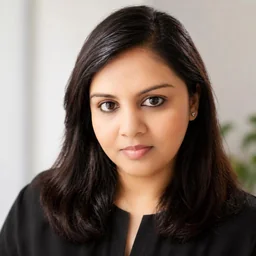
Aarti Gill is an Indian entrepreneur and co-founder of OZiva, a plant-based nutrition and wellness D2C brand. She built OZiva with co-founder Mihir Gadani; Hindustan Unilever acquired a majority stake in the company in 2024.
What is Aarti Gill’s net worth?
This is a privately held company, so there is no disclosed valuation or public net-worth figure; the founder’s stake is a private holding rather than a listed, market-priced one.
What does OZiva do?
OZiva is a clean-label, plant-based nutrition brand selling protein, nutrition and beauty-nutrition products through D2C, marketplaces and retail, now majority-owned by Hindustan Unilever.
What can founders learn from Aarti Gill?
That distribution is the structural ceiling for D2C and a strategic FMCG acquisition can be an optimal outcome, and that credibility-led category building is what makes a brand acquirable.
More founder journeys: women founders in D2C · women in D2C database · women founders in Mumbai.
Your story could be next
Building a startup of your own?
We publish researched, permanent founder features like this one — profiles that keep ranking for your name and your company long after a social post fades. Sponsored placement, quoted per founder, with a guaranteed publish date.
Our newsletter
The Bright Story
If this one stayed with you, get the next one before chai — a single women-led story, researched and anchored only in verifiable facts. No noise, unsubscribe anytime.
Keep reading
Priyanka Salot couldn’t sleep as a new mother, so she built The Sleep Company around a polymer grid
D2C · Baby CarePallavi Utagi built SuperBottoms by getting India to go back to cloth diapers
D2C · JewelleryKiran Khatanhar bootstrapped KKATHA Accessories in Mumbai, and took it to Cannes
D2C · FoodHow Aditi Handa built The Baker’s Dozen on clean-label bread
D2C · FoodHow Pooja Dhingra built Le15 Patisserie and made the macaron an Indian dessert
D2C · Home AppliancesGazal Kalra co-founded Rivigo, India’s first trucking unicorn, on a promise to get drivers home every night
More for founders
- Women-led startup directorySearch 100+ women-led Indian companies by industry, city, funding stage and year.
- VC directoryWhich funds invest in India, at what stage and cheque size, and who they’ve backed.
- Startup trends & dataLive charts of women-led startups in India — sectors, funding stages and cities.
- Free founder toolkit100+ directories, grants, PR, templates, AI tools and India’s schemes.
- Funding MatchFind the government funding you actually qualify for — in 60 seconds.
- Templates & checklistsPitch deck, cap table, term sheet and founders’ agreement.
Comments
No comments yet — be the first to add one.