
Case Study · D2C · Food
Slurrp Farm and the kids-food D2C playbook
An Oxford-trained Rhodes Scholar and a Cambridge-trained economist built a millet-led, additive-free food brand for Indian children in a market that had mostly ignored the category. A long-form case study of category creation, product discipline, and the choice not to compete with Nestlé on its own terms.

The thesis
Indian children’s food, until very recently, had two shelves. The first shelf belonged to multinational conglomerates, Nestlé’s Cerelac, Heinz, Gerber where it sold, selling fortified, wheat-based, shelf-stable formats. The second was kitchens, mothers, grandmothers, household staff making fresh meals from traditional grains, including millets, lentils and seasonal vegetables. There was very little on the mainstream packaged shelf that combined the two: the convenience of the first and the ingredient philosophy of the second.
Slurrp Farm’s founding bet was that this gap was big enough, durable enough and structurally underserved enough to support an entire new packaged-foods company in India. Nearly a decade and multiple funding rounds later, the brand’s growth, sustained retailer demand and the arrival of competition suggest meaningful category traction. This case study unpacks the choices underneath that bet.
The founders: an Oxford Rhodes Scholar and a Cambridge economist
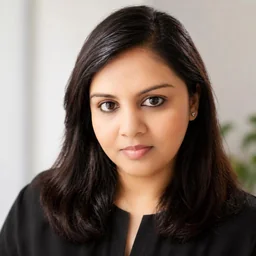
Meghana Narayan and Shauravi Malik came to Slurrp Farm from quite different academic and professional tracks, one from consulting and public-health strategy, the other from investment banking and a Richard Branson-backed investment office, and have spoken in interviews and at consumer-industry conferences about how those complementary backgrounds informed the decision to start a children’s nutrition company.
Meghana is a Rhodes Scholar who read Computation at the University of Oxford and subsequently took an MBA at Harvard Business School. Before Slurrp Farm she led the public-health practice at McKinsey & Company in Delhi. Shauravi read Economics at St. Stephen’s College, Delhi, and took a Master’s in Economics at the University of Cambridge; her finance career ran through roughly six years at J.P. Morgan in London (Consumer / Healthcare / Retail M&A and then Leveraged Finance) and an investment-manager role at Virgin Management, Sir Richard Branson’s investment office, before she co-founded Wholsum Foods. Both had small children of their own when they founded the company, and have publicly cited that experience, not being able to find a single packaged option in India they were willing to feed their kids, as the founding impulse.
The founder profile matters here because it shaped two decisions early. First, the brand was built with an unusually high level of nutritional discipline, reading labels, working with food scientists, going to traditional cookbooks, that consumer-tech founders without that background might not have prioritised. Second, the company chose to build an actual food business with real supply chain, not a marketing layer over a co-packer’s off-the-shelf product. Both choices have been load-bearing for the brand’s positioning since.
The product philosophy: millets, no shortcuts
The founding product philosophy is straightforward to state and unusually disciplined to maintain. Slurrp Farm products are built on a base of traditional Indian millets, ragi (finger millet), jowar (sorghum), foxtail millet and others, instead of refined wheat. Across the catalogue, the company has avoided refined sugar in most SKUs, used jaggery and date paste in its place, and excluded artificial colours, flavours and preservatives.
The cost of that discipline is operational rather than consumer-facing. Millet-based formulations behave differently from wheat-based ones: they have different shelf-life, different baking properties and different texture profiles. Working in millets at scale meant the company had to do development work that didn’t already exist in the mainstream packaged-foods playbook. That R&D investment is part of the moat: a competitor coming in late doesn’t inherit the formulation knowledge.
The choice not to compete with Nestlé on Nestlé’s terms
One of the under-reported strategic decisions at Slurrp Farm is what the founders chose not to do. They did not launch a competing infant cereal at a slightly lower price. They did not try to claim shelf space in the same Mother & Baby aisles where Cerelac sits. They did not position around fortification claims.
Instead, they built an adjacent category, the older-toddler and young-child everyday food problem, the “what do I give my four-year-old for breakfast” question, and they built it around ingredient credibility rather than fortification claims. The competitor for Slurrp Farm in a consumer’s decision is less Nestlé than a tired parent thinking about dosa batter, pancake mix, or cookies, weighing convenience against ingredient quality.
That choice has implications for distribution, for marketing, and for unit economics. It also explains why the brand has been able to grow without taking the Nestlé price-and-shelf war head-on.
Distribution and channel mix
Slurrp Farm’s distribution has been built in stages. The brand started on its own D2C site, where the founders could control the experience and gather direct feedback from early customers (largely educated urban Indian mothers in tier-one cities). It then expanded to Amazon and Flipkart, to BigBasket and other grocery e-commerce, and eventually to quick-commerce platforms (Zepto, Instamart, Blinkit). Modern-trade rollout in select chains has been added more recently.
The pacing is worth noting. Many Indian D2C brands try to launch into every channel at once and end up with the same SKU underperforming in modern trade because the brand isn’t mature enough to pull through the shelf. Slurrp Farm’s approach, cultivate the D2C base, then e-commerce marketplaces, then quick-commerce, then modern trade, built brand pull at each stage before the next. That sequencing shows up in the brand’s defensibility: customers ask for Slurrp Farm by name in stores, which is the cheapest distribution a D2C brand can buy.
The Millé adult brand
Several years after Slurrp Farm launched, the founders extended the platform into adult millet products under the Millé brand. The strategic logic is clean: the same supply chain, formulation knowledge and millet relationships that powered the kids brand can serve adult shoppers who have been told for years that millets are good for them but haven’t had a credible packaged product to buy.
Millé covers millet pasta, dosa batter, savoury snacks and a range of breakfast formats. The two brands share infrastructure but live as distinct go-to-markets, the Millé packaging, voice and shelf placement are visibly different from Slurrp Farm.
The platform play matters because it changes the parent-company economics. Wholsum Foods is not just a kids brand; it is an Indian-millet platform with two consumer surfaces and shared cost structure underneath. That framing is more defensible to a Series B / Series C investor than either brand on its own would be.
Funding history and the capital structure
The publicly reported funding milestones the Indian business press has covered are:
- Seed and pre-Series-A rounds across 2017–2019 from angels and early consumer-focused funds.
- Series A (December 2020), roughly $2 million, led by Fireside Ventures, one of the most active consumer-brand specialist investors in Indian D2C.
- Series B (February 2022), roughly $7 million, led by the Investment Corporation of Dubai (the Government of Dubai’s sovereign wealth fund) with Fireside Ventures participating. Around the same period, actor Anushka Sharma came on board as an investor and brand ambassador.
- January 2024 round, roughly $7.2 million, led by Sharrp Ventures, with Fireside Ventures, Raed Ventures and other existing backers participating.
The exact terms of each round, the resulting cap table and the current valuation are not part of the verified public record this case study relies on. What is on the record is the type of investor: consumer-brand specialists, family offices and a sovereign-linked strategic investor rather than generic growth funds. That choice is consistent with the founders’ broader pattern of choosing strategic capital over maximum-cheque capital.
What founders can take from Slurrp Farm
1. Pick an adjacent category, not a frontal war
Slurrp Farm did not attack Nestlé’s shelf. It built an adjacent shelf the incumbent didn’t prioritise. For founders building in categories with entrenched multinational players, the strategic question is rarely “how do we beat them?” It is “what shelf can we own that they don’t care to defend?” Slurrp Farm’s answer was the everyday-meal moment for four- to ten-year-olds. Other categories have similar adjacencies waiting to be named.
2. Ingredient discipline is a long-term moat
The decision to anchor the brand on millets, with all the formulation complexity that came with it, is the single hardest thing for a competitor to copy. A fast-follower can match packaging, marketing copy and even price. The formulation knowledge across the full millet catalogue is arguably the better part of a decade of compounding R&D. Founders in food and beauty should think about which of their disciplines are easy for competitors to skip and which require time on the bench.
3. Channel sequencing matters
Slurrp Farm went D2C → e-commerce marketplaces → quick-commerce → modern trade. Each step built brand pull that funded the next. Founders who launch into every channel simultaneously usually find their margin eroded by trade schemes long before the brand has the pull to support shelf rent. Channel order is not a tactical detail; it is the shape of the brand’s P&L over the next five years.
4. Build a platform, not just a brand
Adding Millé turned Wholsum Foods from a kids-food company into an Indian-millet platform. That re-framing is what made later-stage investor conversations economically viable, and it is a generally underused move in Indian D2C. Founders should think early about whether the supply chain and ingredient capability they are building can support more than one consumer-facing brand, not as marketing fluff, but as a real second go-to-market with shared back-end.
Numbers and timeline
2016, Wholsum Foods incorporated; Slurrp Farm brand launched, initially through the company’s own D2C website.
2017–2019, Catalogue extends from pancake mixes into cookies, cereals and additional hot-meal SKUs. Seed and pre-Series-A funding rounds reported across this period.
December 2020, Series A of roughly $2 million led by Fireside Ventures. Distribution expands meaningfully into Amazon and large grocery e-commerce.
2021–2022, Millé adult brand launched. Quick-commerce listings (Zepto, Instamart, Blinkit) accelerate as those platforms scale in metros.
February 2022, Series B of roughly $7 million led by the Investment Corporation of Dubai with Fireside Ventures participating. Anushka Sharma joins as investor and brand ambassador around this period.
January 2024, further round of roughly $7.2 million led by Sharrp Ventures with Fireside, Raed Ventures and others.
2024–present, Modern-trade rollout in select chains; selective international expansion into Indian-diaspora markets; continued R&D across the millet platform; growing public profile of the founders (Forbes Asia, BBC 100 Women).
What we don’t know
Wholsum Foods is privately held. Its consolidated revenue, unit economics, exact round sizes, current valuation and the revenue split between Slurrp Farm and Millé are not part of the verified public record. References above to round timing and lead investors are drawn from Indian business press coverage at the time. We have deliberately avoided quoting single dollar or rupee numbers we can’t stand behind.
We also do not have a verified breakdown of the channel mix, what share of revenue comes from D2C versus marketplaces versus quick-commerce versus modern trade. That breakdown would matter for understanding the brand’s gross-margin trajectory; we flag the absence here for transparency.
Sources & further reading
Primary sources used in this case study:
- Slurrp Farm, the kids brand’s own site and catalogue: slurrpfarm.com
- Millé, the adult brand from the same parent company: mille.in
- Fireside Ventures, the consumer-brand specialist investor that led the 2020 Series A and has continued to participate in subsequent rounds: firesideventures.com
- Investment Corporation of Dubai, the Government of Dubai’s sovereign wealth fund, which led the $7 million Series B in February 2022: icd.gov.ae
- The Rhodes Trust, Meghana Narayan is a Rhodes Scholar; biographical context: rhodeshouse.ox.ac.uk
Press coverage referenced (in alphabetical order): BBC (100 Women), CNBC TV18, The Economic Times, Forbes Asia, Forbes India, Inc42, Mint, Mint Lounge, Moneycontrol, The Ken, VCCircle, YourStory. Funding-round reporting is most concentrated on Inc42, Mint and YourStory; founder interviews are most concentrated on Forbes Asia and BBC 100 Women.
If you spot a factual error in this case study, please write to [email protected] and we’ll correct it with an editor’s note.
At a glance
- Company
- Wholsum Foods (parent), brands: Slurrp Farm (kids) & Millé (adults)
- Co-founders
- Meghana Narayan & Shauravi Malik
- Founded
- 2016
- Headquarters
- Gurugram / New Delhi, India
- Founders’ backgrounds
- Meghana, Rhodes Scholar (Oxford, Computation), MBA Harvard Business School, ex-McKinsey (public-health practice, Delhi). Shauravi, St. Stephen’s College (Economics), MPhil/Master’s in Economics (Cambridge), ex-J.P. Morgan London and Virgin Management (Richard Branson’s investment office).
- Category
- Millet-led packaged food for Indian children, pancake mixes, cookies, cereals, hot meals
- Notable backers
- Fireside Ventures (Series A 2020), Investment Corporation of Dubai (Series B 2022 lead), Sharrp Ventures (2024 lead), Raed Ventures, Trifecta Capital, and angel investor / brand ambassador Anushka Sharma
- Recognition
- Forbes Asia, BBC 100 Women (Meghana Narayan), various D2C / consumer brand awards
Frequently asked questions about Slurrp Farm (Wholsum Foods)
Who founded Slurrp Farm?
Slurrp Farm was co-founded in 2016 by Meghana Narayan and Shauravi Malik. Meghana is a Rhodes Scholar who read Computation at the University of Oxford and later took an MBA at Harvard Business School; before Slurrp Farm she led the public-health practice at McKinsey & Company in Delhi. Shauravi read Economics at St. Stephen’s College, Delhi, took a Master’s in Economics at the University of Cambridge, and worked at J.P. Morgan in London (M&A and Leveraged Finance) and subsequently at Virgin Management, Sir Richard Branson’s investment office. They are the founders of the parent company Wholsum Foods, under which Slurrp Farm (children’s food) and the sister brand Millé (millet-based food for adults) sit.
What does Slurrp Farm sell?
Slurrp Farm sells millet-led, additive-free packaged food for Indian children. The core range includes dosa, idli and pancake mixes, savoury and sweet cookies, breakfast cereals and ready-to-cook hot-meal options. The defining product attribute is the use of traditional Indian millets (ragi, jowar, foxtail and others) instead of refined wheat as the primary grain base, along with the absence of preservatives, artificial colours and added refined sugar in most SKUs.
Where can I buy Slurrp Farm products?
Slurrp Farm operates a direct-to-consumer site at slurrpfarm.com alongside listings on the major Indian e-commerce platforms (Amazon, Flipkart, BigBasket, Zepto, Instamart) and selected modern-trade chains. International availability has been added selectively in geographies with strong Indian-diaspora markets. Distribution mix and channel-share details are not publicly disclosed.
Has Slurrp Farm raised funding?
Yes. Wholsum Foods, the parent company behind Slurrp Farm, has raised multiple rounds of venture funding from consumer-focused investors. The publicly reported milestones are a roughly $2 million Series A in December 2020 led by Fireside Ventures, a roughly $7 million Series B in February 2022 led by the Investment Corporation of Dubai (the Government of Dubai’s sovereign wealth fund) with Fireside Ventures participating, and a further $7.2 million round in January 2024 led by Sharrp Ventures alongside Fireside, Raed Ventures and other existing backers. Anushka Sharma is an angel investor and brand ambassador. The precise stage-by-stage cap table and current valuation are not in the verified public record we rely on for this case study.
What is the difference between Slurrp Farm and Millé?
Slurrp Farm is the kids-food brand of the parent Wholsum Foods. Millé is the company’s adult-focused brand, a separate go-to-market identity that uses many of the same millet-based platform ingredients (ragi, jowar, foxtail millet, etc.) but packages and positions them for grown-up shoppers, with formats like millet pasta, dosa batter and savoury snacks. Operationally the two brands share supply chain, formulation expertise and senior leadership; commercially they are separate brands with distinct trade and marketing motions.
More for founders
- Women-led startup directorySearch 100+ women-led Indian companies by industry, city, funding stage and year.
- VC directoryWhich funds invest in India, at what stage and cheque size, and who they’ve backed.
- Startup trends & dataLive charts of women-led startups in India — sectors, funding stages and cities.
- Free founder toolkit100+ directories, grants, PR, templates, AI tools and India’s schemes.
- Funding MatchFind the government funding you actually qualify for — in 60 seconds.
- Templates & checklistsPitch deck, cap table, term sheet and founders’ agreement.
Comments
No comments yet — be the first to add one.